
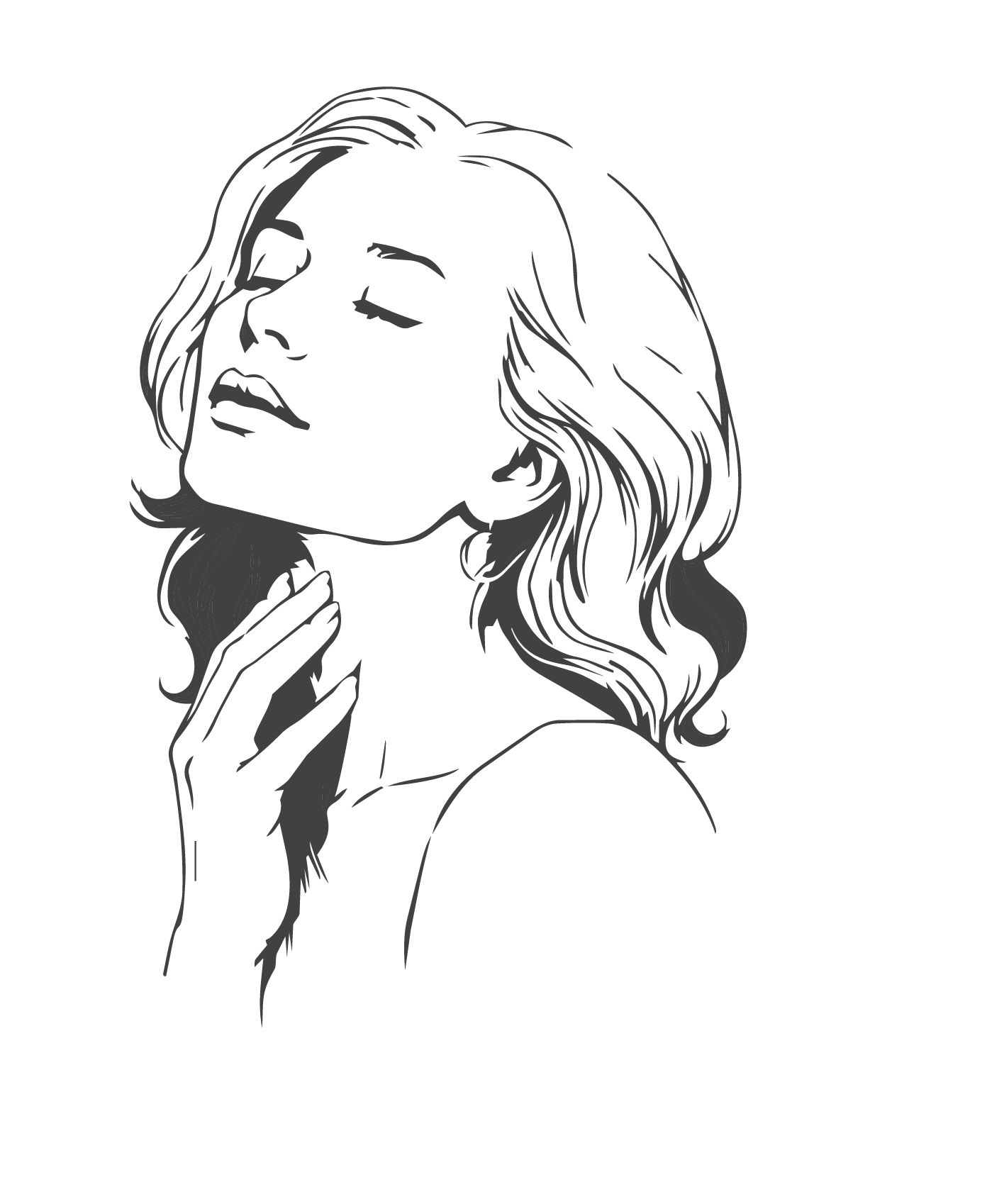
The photograph she almost takes
A woman is lying in a patch of sunlight with music playing. The room is warm, and the light makes the ordinary surface of a glass appear almost impossibly beautiful. She feels something open in her body, a quiet pleasure that has no particular destination.
Then she considers taking a photograph.
The scene would look exquisite on her social feed. The glass, the music, the afternoon, perhaps a caption about sensual living. She begins adjusting the objects to improve the composition. The light changes. She moves the glass again and finds herself thinking about how the moment will appear to somebody else.
The pleasure has not disappeared. It has changed direction. She is now watching herself experience it.
This is not a crime. Making images can be a form of art and delight. But the small transition reveals a question worth asking: What happens to the erotic when a woman feels required to demonstrate that she is experiencing it correctly?
The obligation to look alive
We often use the word erotic as though it refers only to sexual attraction or activity. Yet the experience of aliveness can include attention to texture, movement, sound, imagination, curiosity and the capacity to be moved by something beyond practical usefulness.
A woman may find an erotic charge in a conversation, a dance, a piece of music or a kind of creative work that absorbs her completely. The experience may have nothing to do with a sexual encounter.
Audre Lorde’s essay Uses of the Erotic is one influential invitation to think of the erotic as a form of felt knowledge and power rather than merely a commercialised sexual image. Her work belongs to a particular intellectual and political context and should not be reduced to a decorative quote. It nevertheless opens a useful distinction between living an experience and performing the appearance of it.
Our culture has become adept at selling the appearance. The confident woman in the right clothes, the perfectly arranged body, the curated bedroom, the effortless expression of desire. She is supposed to be free, available to pleasure and always photographically convincing.
The problem is not the beauty of the image. It is the demand that lived sensation conform to it.
The body as an audience project
A woman may enter an intimate encounter while imagining how she appears from the outside. Is her expression attractive? Is she responding enough? Does her body look as it ought to look? Is she being a good lover?
Such questions can displace attention from what is actually happening. She becomes the director and the actor, monitoring the scene while simultaneously trying to feel it.
This does not mean that sexual performance is always inauthentic. People sometimes enjoy theatricality, roleplay or the deliberate presentation of themselves. The distinction is whether the performance is chosen as part of the experience or required to secure approval.
A woman can enjoy dressing beautifully for another person and still remain interested in how she feels. She can play with an image without having to become the image. She can decide that she does not want to be watched at all.
The erotic is not more real because it looks impressive.
Sometimes the most alive encounter is awkward, quiet, funny or entirely unphotogenic.
A woman who never gets it right
The performance standard is particularly punishing because it changes shape. A woman is told to be sexually confident but not aggressive, sensual but not embarrassing, adventurous but not threatening, experienced but not intimidating. She should enjoy pleasure while also making sure the other person feels competent.
No wonder some women become exhausted.
If she feels little desire, she may be told to work on her libido. If she wants something unconventional, she may be told she has not understood healthy intimacy. If she enjoys privacy, somebody may suggest she has internalised shame. If she is direct, she risks being judged as demanding.
The contradictory instructions make it easy to conclude that whatever she experiences must be wrong.
There is another possibility. She can begin with the experience itself, before asking whether it belongs to an approved category. Does she want this touch? Is she curious? Does something feel uncomfortable? Would she rather stop, laugh, talk or change direction?
These questions return authority to the person inside the encounter.
Pleasure can be inconveniently ordinary
Imagine two people attempting a romantic evening. The candles are lit. The music is carefully chosen. One of them has spent an hour preparing a meal. Everything has been arranged to produce a particular atmosphere.
Then the smoke alarm goes off.
The evening collapses into laughter, open windows and a frantic search for a tea towel. Afterwards the two of them sit on the floor eating something less impressive than the original meal. They feel closer than they did when the atmosphere was perfectly staged.
This is not an argument against beautiful rituals. They can support attention and pleasure. It is a reminder that the value of an encounter is not identical to how closely it follows the intended script.
The body may be most available to experience when it is not required to achieve a predetermined result.
This is why I resist treating every guided practice as a promise of transformation. An encounter can open something meaningful, or it can feel ordinary, or it can reveal a limit. The woman is not failing if the expected emotional climax does not arrive.
The difference between presence and correctness
A woman can become extraordinarily skilled at doing an exercise correctly. She follows the breathing instructions, notices sensations, remembers to remain curious and tries not to judge herself.
Then she begins judging herself for judging herself.
The spiral is almost comic. The exercise designed to restore contact with experience becomes another test of whether she can perform the right psychological state.
We need a gentler standard. If her mind wanders, that is part of the experience. If she feels numb, that is what is present. If she becomes irritated by the exercise, the irritation may be more informative than the calm she was expected to achieve.
A practice can invite attention without demanding a particular result. In the I AWAKE nine destinations, embodied exploration is most useful when it enlarges choice rather than creating a new ideal to obey.
A woman’s experience does not become less authentic because it is ordinary, difficult or resistant to the language of transformation.
The social life of the erotic
Erotic life exists in a culture. Beauty standards, gender roles, money, race, disability, age and public expectations shape what a woman feels permitted to express. We cannot solve these pressures merely by asking her to be more confident.
A woman may know that a particular body ideal is narrow and still feel its force. She may understand that sexual agency matters and remain afraid of a partner’s disappointment. Knowledge and embodied response do not always change at the same pace.
This is not evidence that she is insufficiently liberated. It reflects the complexity of living in a social world while trying to remain in contact with one’s own sensations.
There are material choices that can help: seeking relationships in which limits are respected, finding spaces where different bodies and ages are genuinely welcome, questioning commercial messages that equate attractiveness with worth, or receiving professional support for persistent distress.
But no woman should have to convert those efforts into a new performance of being entirely free from cultural influence.
The art of a smaller moment
The woman returns to the patch of sunlight. She puts down the phone. The glass is still beautiful. The music has moved to a piece she does not know.
She could photograph the scene later. For now she wants to feel it.
There is nothing grand about the decision. She has not become immune to the opinions of strangers. She will probably think about photographs again tomorrow. The public gaze has not vanished.
But she has noticed a moment in which her attention was leaving the lived experience and moving toward its appearance. She has chosen to return.
That is one possible form of erotic authority: not the power to command a perfect response, but the capacity to notice what is happening and remain curious about it.
Being seen without becoming the image
A woman may also choose to be seen. She might dress extravagantly, dance in public, share a photograph or enter an intimate encounter with delight in the fact that somebody is looking at her.
The wish to be visible is not inherently false. It can be joyful and deeply chosen.
The important question is whether she remains present as a person with preferences, limits and changing experiences. Can she stop the dance? Change the clothes? Refuse the photograph? Laugh when the scene becomes ridiculous? Does being seen require her to surrender her own interpretation of what is happening?
She can enjoy attention without becoming a public object.
She can be erotic without displaying a performance of erotic competence.
And on days when she feels no particular sensual charge, she remains fully human.
The glass of water
The music ends. The woman gets up and takes the glass to the kitchen. There is a fingerprint on it and a small ring of water on the table.
The scene would no longer make an impressive photograph.
It was still a good afternoon.
The erotic is not something she must produce for an audience, a partner or a self-development programme. It is one of the ways life may become vivid from the inside.
Sometimes that vividness is unmistakable. Sometimes it is quiet enough to disappear the moment she begins to prove that it exists.
She can leave the moment alone.
It was hers while it happened.
Connected reading
- Why Being Wanted Is Not the Same as Wanting, on the gap between gaze and appetite.
- Pleasure After Shame, on enjoyment without public proof.
- The Biology and Politics of a Yes, on the social conditions of intimate choice.
- The Sensual Institute, for broader perspectives on sensation and sensual life.
This essay uses the erotic as a philosophical and experiential term, not a clinical theory of sexual functioning. Every intimate encounter remains subject to consent and individual preference.