
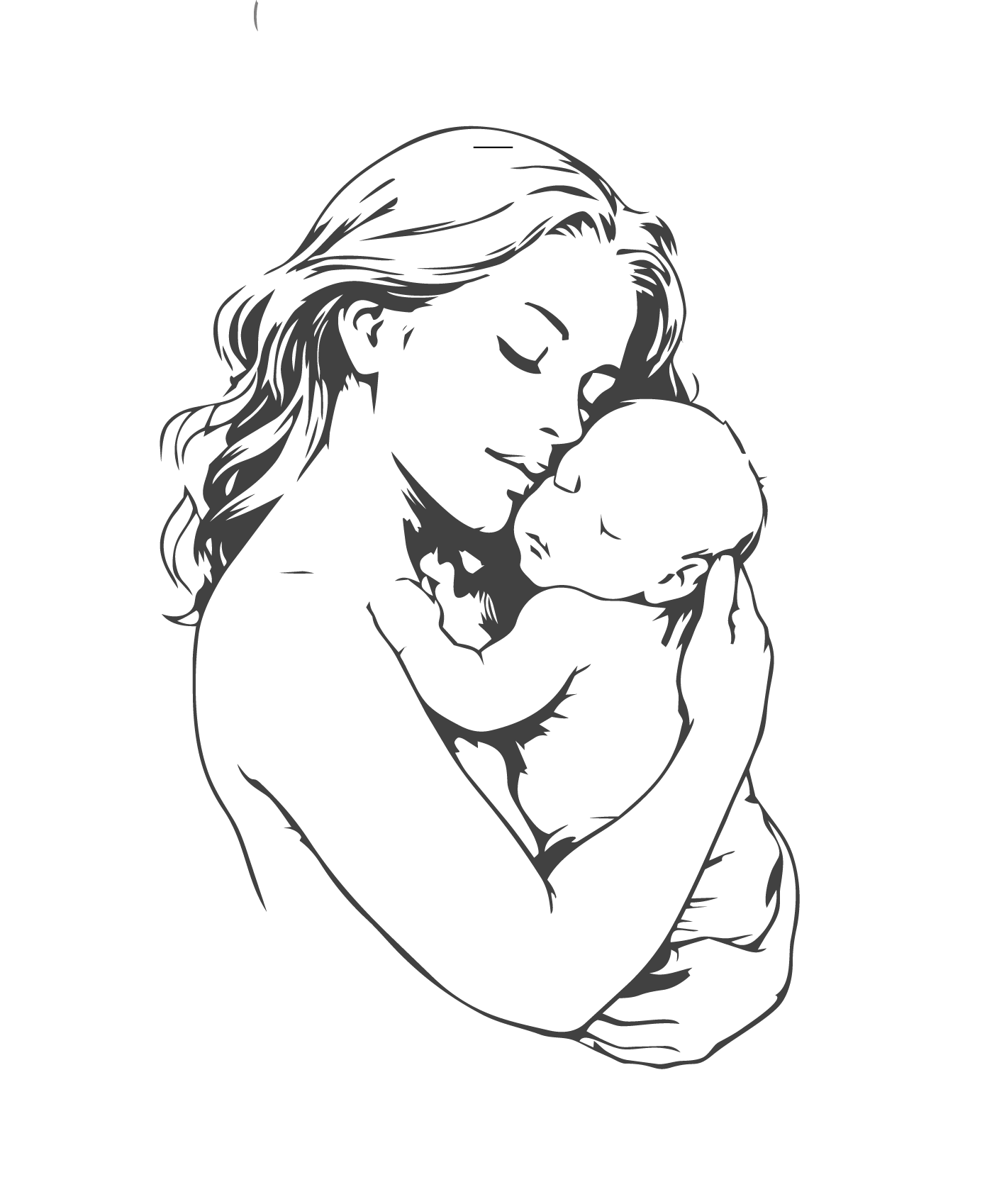
The woman on the sofa
She is lying down. That is all. No injury, no dramatic illness, no appointment to keep. Her eyes are open and she is staring at the ceiling while the afternoon carries on outside the window.
Someone enters and asks whether she is feeling all right.
She says yes.
The person pauses, a little puzzled. Did something happen? Does she have a headache? Is she upset?
She says no again, although a headache is beginning to seem like a convenient possibility. A headache would explain the lying down. It would turn her horizontal body into a legitimate response to a problem.
Without an explanation, the scene becomes faintly suspicious.
Some people can sit on a sofa and simply be people sitting on a sofa. Others find themselves required to produce evidence that inactivity has been earned.
The distribution of that permission is one of the quieter forms of inequality.
The work that counts and the work that becomes atmosphere
We often speak about labour as though it starts and ends at the workplace. Hours are recorded, wages are calculated, meetings occupy calendars. Those forms of work are visible enough to be recognised as reasons a person might be tired.
Care work is less easily counted. It includes feeding children, accompanying relatives to medical appointments, maintaining relationships, noticing changes in somebody’s health, organising transport and anticipating the countless small problems that make a household function.
Some of this work is paid. Much is not. International research, including OECD analyses, documents persistent gender differences in unpaid responsibilities, although national patterns and individual households vary. The finding matters because it interrupts the romantic account in which each woman has simply chosen to be the one who does more.
But the burden extends beyond the hours. A person may be technically off duty and still remain the one who listens for the baby, remembers the appointment or checks whether someone has eaten. The formal work may have stopped while attention remains on call.
This can make rest feel unsafe or morally questionable. She may know from experience that the moment she relaxes, something will be missed and she will be held responsible for the consequences.
It is difficult to rest when the household treats your awareness as a public utility.
What exactly is rest?
Rest is not identical to pleasure, and neither is it identical to sleep. A woman can spend an evening watching a series and still feel responsible for monitoring everybody else. She can lie down with her eyes closed while mentally arranging tomorrow’s work. She can take a holiday and find herself organising every meal and transport detail for the people who are supposedly on holiday with her.
Rest involves some freedom from demand. The form may differ from person to person: sleep, a walk, solitude, quiet reading, a conversation that asks nothing practical, a day without obligations. There is no single correct ritual.
We should also resist the idea that a person must optimise rest. Recover your nervous system in twelve minutes. Become more resilient. Breathe more efficiently. Turn leisure into a skill that will let you produce more work tomorrow.
Useful practices are not the enemy. They can help people recover from pressure. The danger lies in making rest conditional on an increase in productivity, as though a human being were permitted to stop only because the pause will improve her future performance.
A woman does not have to justify her existence through output every hour of the day.
The privilege hidden inside a free afternoon
The possibility of rest is shaped by money, housing, health, family structure and community support. Advice to take a weekend for yourself is almost surreal when a person cannot afford childcare, a safe place to sleep or time away from paid work.
For some women, the problem is not psychological permission but material impossibility. A single parent may have no trustworthy adult available to take responsibility. A carer may be unable to leave an ill relative unattended. A person working several jobs may have little discretion over shifts.
Telling such a woman that she needs better boundaries can be deeply insulting. She may have boundaries. What she lacks is an arrangement in which those boundaries can be supported.
This is why the conversation about rest must extend beyond individual habits. It includes wages, social services, paid leave, accessible care and the organisation of domestic responsibilities. A culture that treats exhaustion as an individual failure avoids asking why so many people are operating at the limit of their resources.
The political and the personal are not separate here. They arrive together in the body that is trying to sleep.
Guilt has a timetable
A woman may have a free afternoon and discover she cannot enjoy it. She starts a book, then remembers laundry. She sits in the garden, then calculates whether she should be answering emails. She tries to nap, then experiences the peculiar guilt of not doing something she hasn’t been explicitly asked to do.
Some of this guilt comes from practical necessity. There may be real work waiting. But some of it is the result of a learned standard: she should always be using herself well.
She may have grown up watching women work while men rested. The arrangement seemed natural because nobody described it as a choice. Her mother stood at the sink after dinner while the others discussed the news. Her grandmother could make a meal for twelve and apologise for not having baked a second dessert. The women were admired for endurance and invisible when they needed to stop.
Now the younger woman sits on a sofa and feels disloyal to the lineage of women who never had that luxury.
There is tenderness in remembering their labour. There is no obligation to repeat it in order to honour them.
The possibility that earlier women endured too much can be painful to recognise. It may raise grief, anger and a sense that one has been given a life made possible by sacrifices nobody properly acknowledged.
But a daughter does not repay a mother’s exhaustion by becoming exhausted herself.
The partner who is already resting
Two adults live together. One sits down after dinner. The other continues clearing the table, preparing tomorrow’s food and checking messages from school. Nobody has explicitly assigned the evening this way. The pattern is so familiar that it has become almost invisible.
When the second person finally stops, the first says they would have helped if asked.
There is the familiar complication. The person who has to notice, delegate and monitor the work has not stopped being responsible for it. The request for help may become another job.
In The Hours Nobody Counts, we explored how cognitive labour can remain uneven even where visible chores are shared. The unequal right to rest is the other side of that arrangement. If one person holds the future in their head, their body may never experience a full interval off duty.
A fairer system might involve genuinely shared responsibility for whole areas of family life. It might require learning new skills, accepting different standards where the difference is harmless, and allowing the person who usually manages everything to step away without becoming the default emergency service.
This is not a technique designed to obtain more gratitude from the tired woman. It is a way of treating her time as equal in value.
When rest feels like an identity crisis
Some women have built a sense of worth around being indispensable. They know what to do when something goes wrong. They are praised for keeping life running. Stopping may reveal not only fatigue but uncertainty about who they are when nobody needs them.
This is not evidence that they secretly enjoy exploitation. A role can provide belonging, competence and purpose while also becoming unsustainable. The emotional work of changing it may be real.
A woman might feel strangely sad when somebody else successfully handles a task. She might check the result several times. She might discover how difficult it is to allow another person to become competent in a role she has held for years.
That reaction deserves curiosity, not mockery. It may have protected a life in which being needed was an important route to love and recognition.
The question is whether she can discover other forms of value without having to destroy the legitimate pleasure she takes in caring.
Mother can contain the joy of being needed and the relief of not being needed. Neither is the whole person.
The small experiment that is not a cure
Suppose a woman chooses a single hour and asks someone she trusts to take full responsibility for the household during it. Not to help when called, but to remain responsible for whatever happens within agreed limits.
She might spend the hour doing something delightful. She might simply stare at the wall. She might struggle to resist checking her phone. She might realise that she is not ready to trust the arrangement because previous promises have failed.
The experiment provides information. It does not prove that she needs to become better at relaxation. Perhaps she needs a more reliable agreement. Perhaps the support is genuinely unavailable. Perhaps she would rather use the hour to speak with a friend.
A useful practice should be small enough to reveal a condition without pretending to solve every structural problem.
The world is not repaired by a sixty-minute boundary. But a woman may notice, for the first time, the difference between being physically still and being genuinely free from responsibility.
The beautiful uselessness of an afternoon
She is lying on the sofa again. The house is making its usual noises. Someone is cooking, somebody else is reading, a neighbour’s radio is leaking through the wall.
A question appears in her mind about what she ought to do next. She recognises it. The question has been with her a long time. She does not need to answer it immediately.
She may get up in five minutes. She may fall asleep. She may notice that there is still work she wishes to do later. She remains a capable, caring human being while resting.
The body on the sofa is not a failed employee of the family.
It is a person.
And that should be sufficient reason for an afternoon in which nothing more is required.
Connected reading
- Who Holds the Woman Who Holds Everyone?, on caregiving and the need for care.
- The Conversation After Everyone Is Asleep, on household administration and intimacy.
- The Woman Who Wants to Be Left Alone, on solitude as a legitimate form of desire.
- The Nine Destinations, I AWAKE, for the broader experience of embodiment and choice.
This essay considers care and social arrangements. The ability to rest is affected by material conditions and health, and cannot always be improved through individual boundary setting alone.
A free course to continue
Whose Needs Are You Already Carrying?
Make the anticipating, remembering and organising visible. Choose one responsibility to share, renegotiate or safely delay. Free at the Sensual Institute; account and login required.