
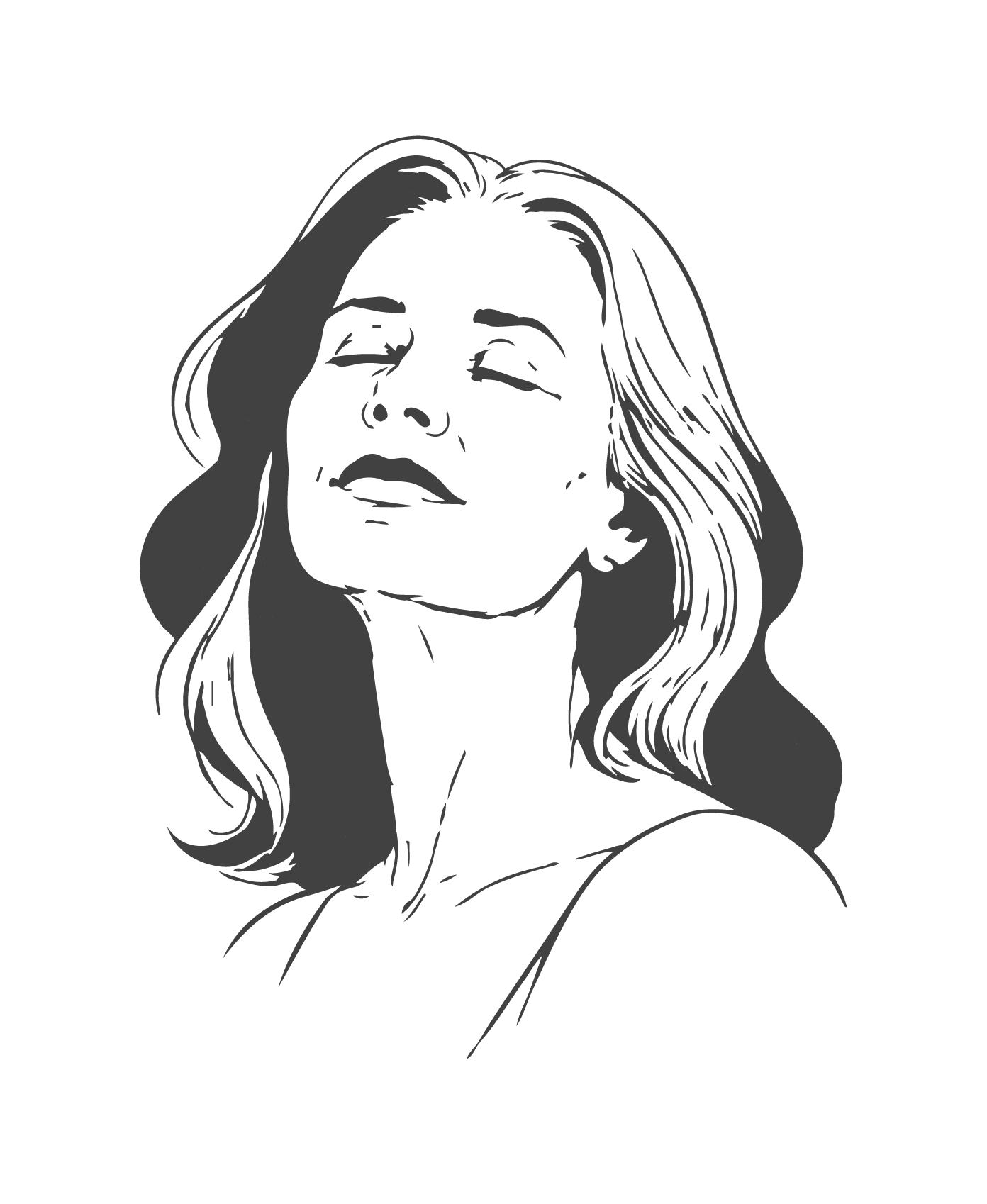
A woman refuses the question
At a gathering, someone asks a woman whether menopause has changed her sex life.
She smiles, considers the question and says, Which version would you like?
There are several. One version contains nights when sleep has been so difficult that desire seems like a request from another planet. Another contains an unexpected increase in erotic curiosity. Another contains discomfort that requires medical attention. There are periods of indifference, pleasure, grief, delight and a new willingness to say no without constructing a complicated explanation.
She has not become a different species. She is living through changes whose meaning is not fixed in advance.
The cultural language around menopause often offers two stories. One announces the end of sexuality, the fading of attractiveness and the inevitable decline of desire. The other promises a triumphant erotic rebirth in which a woman, finally free of fertility, becomes more sensual, confident and powerful than ever.
Both stories can feel cruel when presented as universal expectations.
A woman deserves a more precise question than which of these performances she has achieved.
Physiology deserves a literal conversation
Menopause is not merely an attitude toward ageing. The transition can involve physiological changes, and some women experience symptoms affecting sleep, mood, sexual comfort and genitourinary health. Others have relatively few symptoms or experience changes that are not particularly distressing.
The WHO’s menopause fact sheet offers a public-health overview, while NICE guidance NG23 addresses assessment and management in clinical practice. Neither should be treated as a template for the experience of one individual woman.
This matters because bodily discomfort should not be romanticised as an energetic initiation. Pain during sex is not a metaphor that must be endured to become wiser. Persistent symptoms may warrant clinical assessment and discussion of available treatment options, individual circumstances and preferences.
Equally, not every change in desire is a medical problem requiring correction. Some women simply want less sexual activity or different kinds of intimacy. Whether this causes distress and what the woman herself wishes to change are important distinctions.
The body has a life beyond other people’s expectations of what it ought to provide.
The myths people bring into the bedroom
A woman may have learned that sexuality belongs primarily to youth. Menopause then appears not only as a biological transition but as a cultural signal that she ought to retreat from visibility, pleasure or sexual curiosity.
Another may have absorbed the opposite demand: empowered women should remain sexually vibrant at every age. If she feels indifferent or tired, she interprets the experience as a failure of liberation.
Neither expectation leaves much room for actual self-knowledge.
A woman might feel erotic desire without wishing to be sexually active with a partner. She might value affectionate touch more than intercourse. She might experience attraction differently than she did in her twenties. She might be delighted to have little interest in sex for a period, or deeply troubled by a loss that matters to her.
These experiences are not stages through which all women must pass. They are possible positions within a much wider field of bodily, relational and psychological life.
The question is not whether her desire conforms to a socially approved age. It is whether she can meet the experience she actually has without shame or unnecessary fear.
A history lives in the bed with us
Sexual experience does not begin anew at menopause. A woman brings her relationships, memories, previous forms of pleasure, disappointments, injuries, habits and expectations into the transition.
A relationship in which her preferences have been respected may offer different conditions from one where refusals have been punished. A woman who has never been encouraged to speak about desire may find that bodily change exposes an old communication problem. Another may discover new freedom precisely because she is less willing to accept arrangements that have never suited her.
We should not reduce these variations to hormone levels or attachment labels. Biology, context and history can interact without producing one universal explanation.
A woman may need clinical support for a symptom and an honest conversation about her relationship. One intervention cannot necessarily replace the other.
The body is neither a machine with one missing chemical nor a pure expression of psychological meaning. It is a living body in a life.
The freedom not to compensate
Sometimes the cultural pressure to remain sexually attractive turns menopause into another performance test. A woman may feel obliged to prove that she is still desirable, still adventurous, still available. The fear of becoming invisible can push her to agree to encounters she does not actually want.
The desire for recognition is understandable. Ageism and beauty standards can affect women’s lives materially and socially. But the solution is not to make each woman demonstrate that the standards are wrong through her own sexual performance.
She can enjoy being wanted and still choose not to participate. She can seek pleasure and remain uninterested in particular activities. She can dress beautifully for herself and not offer the clothes as an invitation.
In Why Being Wanted Is Not the Same as Wanting, we explore that difference. After menopause it can become especially important because public expectations may shift while the woman’s actual erotic life continues in its own unpredictable way.
Being desirable is not the same as being obligated to desire.
What changes when fear becomes speakable
A woman might be frightened that a change in sexual response means she is losing a relationship. She may worry that pain will continue, that her body will never feel familiar again, or that a partner will stop wanting her.
The fear deserves attention, not a quick declaration that menopause is an exciting new chapter.
Sometimes the appropriate response is practical: a medical appointment, access to information, a conversation with a partner, or support for a problem that has become distressing. Sometimes it is a period of experimentation with different forms of intimacy that remain fully voluntary.
A woman may need to grieve something. She may also discover pleasure that did not fit her earlier sense of what sexuality was supposed to look like. Neither experience cancels the other.
An honest conversation makes room for mixed states without requiring a diagnosis from the group or a triumphant personal revelation.
The erotic afterlife of a changing self
There is something interesting about a woman who is no longer willing to spend an evening proving that she is pleasant, attractive or easy to satisfy. She may know better what she enjoys. Or she may be less certain than ever. Both conditions can change how she approaches intimacy.
One woman chooses to be more direct about preferences she once concealed. Another steps away from sexual activity for a period. Another experiences renewed curiosity with a familiar partner. Another begins a new relationship and discovers the strange pleasure of being known at an age when society expected her to become less visible.
None is the model woman.
Eros does not retire at a prescribed birthday. Nor is it compelled to arrive in the form of sexual appetite. Curiosity, sensory pleasure, play, attention and the freedom to want or refuse remain available in different ways to different people.
The field is wider than a hormonal storyline or a motivational slogan.
It is not a verdict on the partnership
Changes in desire can place pressure on a relationship, especially when two people interpret the same change differently. One person may experience it as an unwelcome loss of closeness. The other may be trying to understand a body that no longer responds as expected. A conversation can easily become an argument about who is failing whom.
It helps to distinguish the problem each person believes they are describing. Is the woman distressed by a symptom? Does she miss a form of pleasure? Is she content with her current level of sexual interest but anxious about a partner’s disappointment? Does the partner miss physical contact, erotic activity or the reassurance of being wanted? These questions lead to different kinds of attention.
No partner can diagnose the other person’s internal experience by observing the frequency of sex. Nor can one person demand a sexual response as payment for relationship security. Both may need care, honesty and time to discover what is genuinely possible.
Some couples seek qualified support. Others find practical changes or new forms of closeness. Still others discover that the relationship has questions that cannot be resolved by treating menopause alone. A woman’s body need not become the sole explanation for everything that is difficult between two people.
The woman at the gathering
The first woman has been listening while others share their experiences. One describes painful changes and the relief of finally receiving appropriate medical care. Another speaks about the joy of not needing to perform sexual availability. A third says she has become more interested in intimacy than she was twenty years ago.
Nobody has to vote on which account is correct.
They are speaking from their own bodies, histories and circumstances. The differences are not evidence that some women have succeeded and others have failed. They are evidence that lived experience is more complex than a single story.
The woman returns to the original question. Has menopause changed your sex life?
Yes, she says. In ways I am still learning to describe.
And that is a complete answer.
Connected reading
- The Heat Is Real: Menopause Without Metaphor, on clinical reality and its social meanings.
- The Body After Its Public Job, on embodiment beyond the public gaze.
- Touch Without Obligation, on intimacy without compulsory outcomes.
- The Sensual Encyclopedia, for additional perspectives on bodily experience and sensual life.
This essay is not medical advice. Sexual pain, persistent genitourinary symptoms, mood symptoms or other distressing changes deserve individual clinical assessment.
A free course to continue
When Desire Goes Quiet
Explore what surrounds a quiet desire: fatigue, obligation, expectation and preference. Make room for an honest answer without prescribing what you should want. Free at the Sensual Institute; account and login required.