
The woman who brought soup
There is a sort of love that arrives carrying a pot with a badly fitting lid. Nobody asked for anything extraordinary. A friend heard that the baby had been ill, that the house had been awake for three nights, that the mother had forgotten to eat lunch. She appears at the door with soup, bread and no demand for a coherent account of what has happened.
She does not say that everything will be fine. She does not ask the mother to make a list of the five things for which she is grateful. She leaves the food, looks around the kitchen and asks where the clean bowls live. For twenty minutes another adult carries a piece of the day.
The tenderness in this is almost embarrassing. Not because the gesture is immense, but because it should not be so rare that the recipient wants to cry over an ordinary saucepan. Many women have become accustomed to treating such help as generosity beyond reasonable expectation. They are permitted a family, a career, a body that heals, friendships, an identity, and perhaps the occasional bath. They are simply expected to coordinate the whole enterprise without looking overwhelmed.
Sisterhood, in this context, is not a slogan about women always supporting women. That slogan has never survived much contact with real life. It is the more difficult, practical possibility that care might be held by more than one person, and that the woman who gives it might also be someone to whom care can return.
The fantasy of the self-sufficient mother
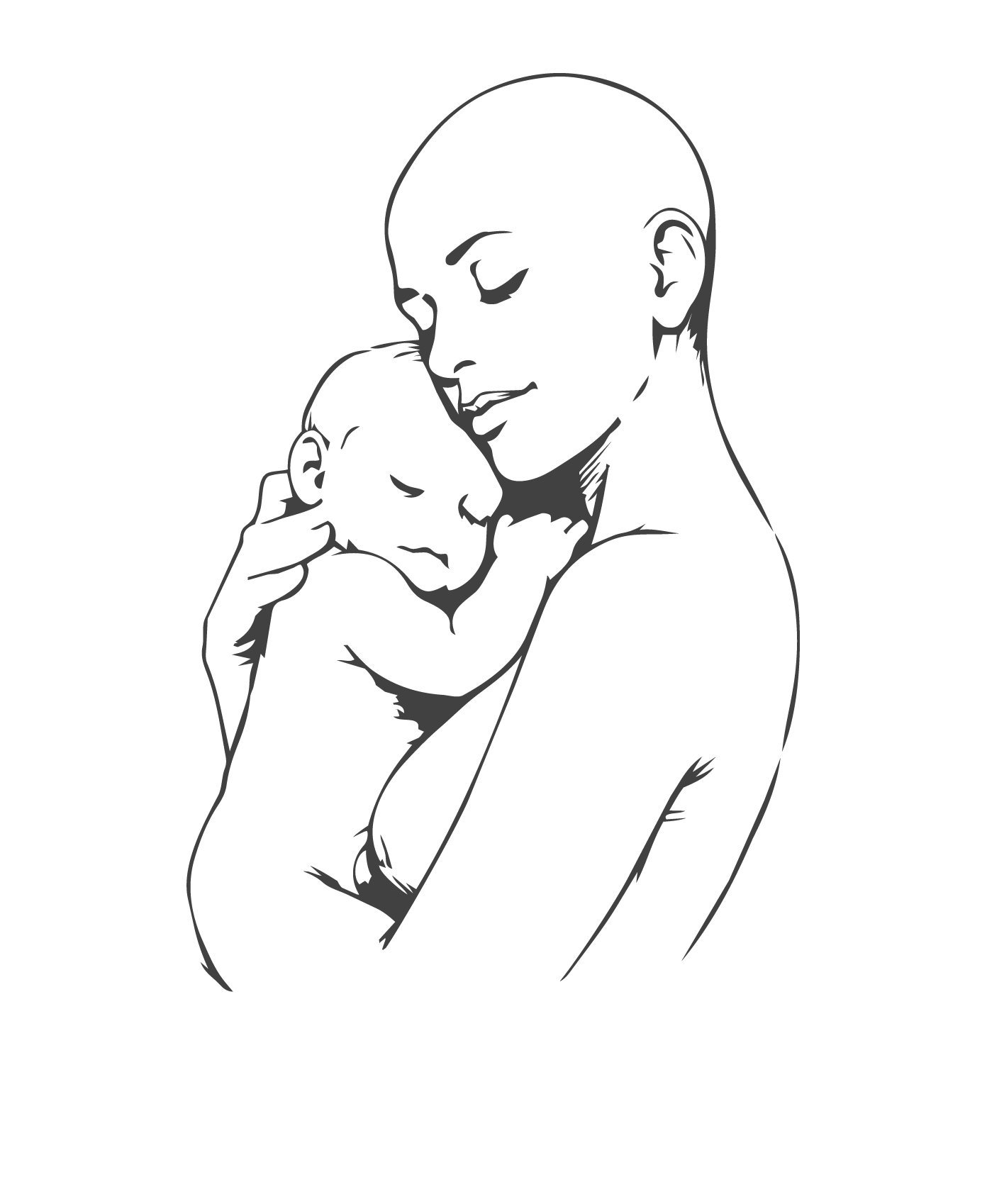
The image is deeply familiar: mother and child, alone in a clean room, suspended in a private world of devotion. It is beautiful, and it is incomplete. Human children require extended care. Across societies, parenting has involved networks of relatives, other adults, older children, neighbours, institutions and chosen companions. The arrangements vary widely, but the idea of one endlessly competent woman as the complete infrastructure of a child’s life is historically and socially narrow.
Anthropologist Sarah Blaffer Hrdy has argued that allomaternal care, help from others besides a child’s mother, mattered to human evolution and social cognition. That is an influential interpretation within a larger scientific conversation, not a command to reproduce a prehistoric ideal. Other researchers emphasise the cultural flexibility of how human communities distribute care. What matters for us is the reminder that the isolated mother is not a timeless biological destiny.
A woman does not fail her child by needing other people. Nor does a child belong less profoundly to her because somebody else knows how to comfort them. There can be extraordinary delight in watching a child form a distinct bond with an aunt, friend, grandparent or trusted adult. The child becomes more fully a person with a world of relationships. The mother may experience relief, jealousy, gratitude and fear in the same moment.
All those reactions are possible. A woman does not have to pretend she only feels generous when the person she loves discovers that someone else can also be wonderful.
Not every sister has been kind
There is a reason some women hesitate when the word sisterhood appears. They have known female friendship as competition, exclusion or control. The cruelest comment about a changing body may have come from another woman. A mother may have been criticised by female relatives for feeding, working, resting, dressing, staying, leaving or failing to appear appropriately grateful.
We should not cover these experiences with a pink blanket and call it community. Women are not exempt from power, envy, social hierarchies or ordinary meanness. Shared gender does not guarantee safety. Nor does shared motherhood guarantee that two people understand each other’s lives.
Sisterhood worthy of the name includes discernment. Which women can celebrate without covertly measuring? Who can hear a disagreement without turning it into a test of loyalty? Who knows how to hold confidence? Which relationships survive a real no? Which friendships have become places where one woman provides all the listening while the other never notices the imbalance?
A beautiful gathering is not proved by everyone saying the correct compassionate words. It is tested by the possibility of truth. Sometimes truth reveals a friendship capable of growth. Sometimes it reveals that the relationship cannot carry what we have been asking of it. Either outcome may matter.
The cost of having to make it look easy
A woman can have loving people in her life and still feel lonely. Social connection has more than one dimension: how many relationships exist, what help can actually be exchanged, and whether those exchanges feel safe and satisfying. The World Health Organization’s work on social connection distinguishes social isolation from loneliness, recognising that the subjective experience of disconnection is not identical to the number of people in a contact list.
One mother may be surrounded by other parents at school and not know how to tell any of them that she feels estranged from her own body. Another may be alone much of the day yet deeply held by a small network that answers when things become difficult. A third may have plenty of invitations and no one who can be trusted with an ugly thought.
Our public culture encourages a strange performance. A woman is expected to have community, but not to need it too visibly. She should be independent, generous and sociable, preferably in a way that can be displayed in a photograph. The women who are struggling may therefore become even less likely to reach out. Asking for help appears to endanger the image of being capable.
The cost is not merely emotional. When care networks are thin, time and money become harder to protect. A sick child can mean missed work. A broken washing machine can become a crisis. A medical appointment may require an elaborate negotiation. A good friend cannot replace social policy, but reliable social support can make the difference between an ordinary difficulty and a week that unravels.
The joy that cannot be outsourced to a partner
Even a devoted partner is not an entire world. There are forms of recognition that arise in shared experience, from the absurd intimacy of describing the first year after birth to the particular relief of being understood without a lengthy translation. A friend may remember the young woman you were before anyone called you mother. She can hold both the new devotion and the previous appetite in view.
This is one reason female friendship can feel like a return of dimensions. At home, one woman may be the person who knows where the thermometer is. At work, the one who is organised. In conversation with an old friend, she can also be ridiculous, ambitious, lustful, frightened, funny and startlingly uninterested in being useful.
The friendship does not need to be built only around motherhood. In fact, a bond with someone whose life has taken another route can protect against the idea that every meaningful conversation must involve children. The child-free friend is not a supporting character assigned to relieve the mother’s schedule. She has her own longings, commitments, fatigue and complicated life. Reciprocal connection respects the fullness of both.
There is a delicious freedom in being known outside the role currently consuming your days. Someone remembers the music you loved at twenty-three. Someone sends a photograph of a terrible hat and knows you will laugh. Someone asks what you are writing, not merely whether everybody in the household is well.
Attachment does not end when we grow up
The language of attachment is often reserved for infants or romantic partners, as though mature adults are supposed to have graduated from the need for reliable people. But the capacity to seek and offer comfort remains relevant throughout life. Friendships can offer a sense of being recognised, accompanied and safe enough to be uncertain.
We should not turn this into a diagnosis of every relationship. A friend who has not answered for three days does not necessarily have an avoidant attachment style. A woman who is frightened of being excluded is not reducible to an anxious attachment identity. Context, history, temperament and the actual behaviour of people matter more than a convenient label.
What helps is remembering that care can be enacted through ordinary things: arriving when you said you would, acknowledging hurt, not demanding a performance, respecting limits, repairing the moment you were careless. Such gestures are not glamorous, but they allow trust to accumulate.
Sisterhood does not require an uninterrupted flow of intimacy. In fact, relationships become more durable when people are allowed to change. A friend may have less time after giving birth; another may feel excluded by the shift. Both can be true without one of them being declared selfish. A clear conversation can sometimes do more than months of suspicious silence.
Envy belongs in the room too
Perhaps you love your friend and envy her freedom. Perhaps she envies the tenderness you know with your child and is ashamed of the feeling. Perhaps one of you is thriving professionally while the other has been exhausted by caregiving. A woman can rejoice for her friend and still feel pierced by the difference between their lives.
Envy is often treated as a moral confession. But as an experience it can reveal a longing, a grief, an old comparison, or the desire to be seen. It is not evidence that a person secretly wants to destroy what someone else has. We do not need to act from every feeling to be willing to examine it.
A friendship can make room for this complexity when it does not require every emotion to be beautiful. ‘I’m so happy for you, and I notice this stirs something difficult in me.’ Such honesty needs tact and timing. A person celebrating good news should not be forced to manage another person’s distress in the same breath. Yet in the larger life of a friendship, mixed feelings do not necessarily threaten love.
There is even a fierce tenderness in being able to survive a friend’s different life without asking her to shrink it for your comfort.
The practical architecture of belonging
Community is built through repeated material acts, not only declarations of shared values. Who has the spare key? Who can collect a child if a meeting runs late? Who notices that a woman has not been sleeping? Who can receive an answer of ‘not today’ without making it a referendum on affection? Who can celebrate the occasion when somebody finally gets a whole afternoon to herself?
These arrangements are not spontaneous miracles. They require time, trust, boundaries and sometimes explicit agreements. A small circle might share school pickups; another might offer regular evenings for conversation; another might simply commit to telling the truth instead of presenting only the edited version of life.
We need not pretend every group is safe for every kind of disclosure. Intimate experiences deserve consent and confidentiality. Some stories require therapeutic, legal or medical help that a peer gathering cannot provide. Community becomes more trustworthy when it knows the limits of what it can hold and does not promise to cure what it can only witness.
A meeting where one woman’s words are spoken by another offers an unusual form of listening. The speaker hears her own experience from outside her customary voice. The listener lends attention without trying to own the meaning. The format can make room for recognition, but recognition does not replace an individual’s right to decide what her experience means.
The mother who arrives as herself
Imagine the woman from the beginning finally sitting down with the soup. Her child is sleeping. The kitchen is not tidy. Tomorrow will still involve school logistics, paid work, bills and bodies that occasionally refuse to cooperate. One meal cannot solve the distribution of care.
But the evening has changed. Another person knows. Another person came. The mother was not required to convert her exhaustion into a charming anecdote before receiving food. Something of her humanity was recognised without assessment.
Perhaps next month she will be the one arriving with soup. Perhaps she will have no capacity for that, and someone else will carry the gesture. Reciprocity does not require immediate balance in every encounter. It asks whether, across time and circumstance, people can take turns being more than a demand on one another.
The mother-child bond may be extraordinary. Love can enlarge a life so profoundly that the world feels reorganised. Yet the enormity of that love need not make the mother the only available adult in the universe. She is allowed to be held, too.
Sisterhood is not a luxury added after the real work is done. At its best, it is part of the social body that makes the real work humanly possible.
Research and connected reading
- Sarah Blaffer Hrdy, Evolutionary Context of Human Development: The Cooperative Breeding Model. An influential evolutionary hypothesis about allomaternal assistance, not a fixed blueprint for modern families.
- WHO Commission on Social Connection, 2025. Research on social connection, isolation and wellbeing.
- WHO, Social connection: questions and answers. Distinctions between the structure, function and quality of relationships.
- The Astonishing Excess of Love. A connected Mother transmission on joy and a life enlarged by care.
- The Hours Nobody Counts. On the distribution of invisible responsibility.
- The Sensual Institute. Further research-informed resources on embodiment, relationships and care.
The scenes are illustrative. The essay does not present any particular woman or group as a documented clinical case.