
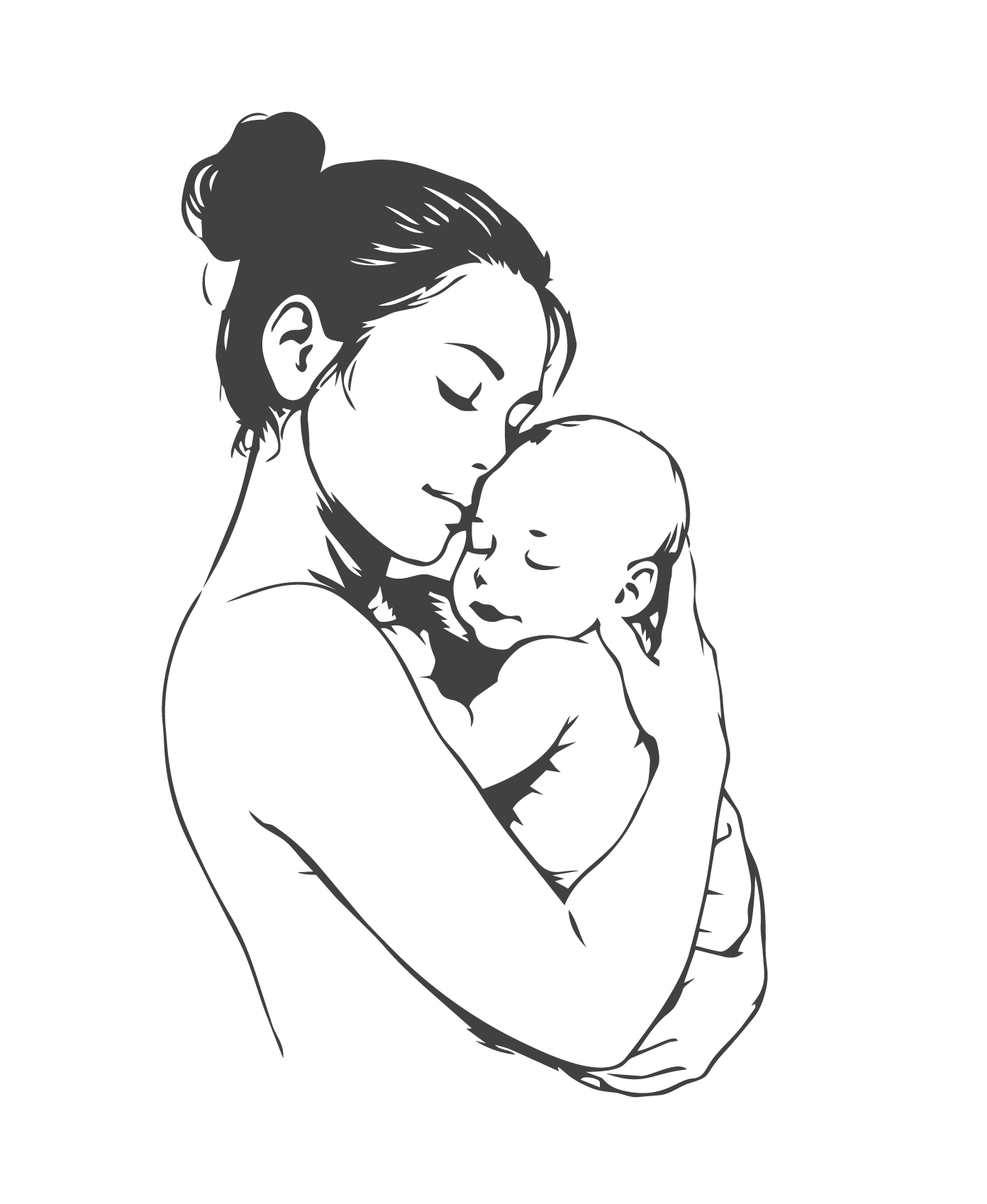
Nobody tells you about the ridiculousness of loving someone this much.
They tell you about responsibility. They tell you about exhaustion, and what to pack, and how little sleep you might get. Some tell you that your old life will never return, which is true in certain ways and also an unhelpfully theatrical thing to announce to a woman who is still trying to eat a sandwich.
But there is this other thing.
A child is asleep with one hand open. A woman is folding the smallest pair of socks she has ever held. She looks at the face in front of her and experiences a love so disproportionate to anything the child has done that it seems to defy the moral accounting she knows. The child has no achievements. No interesting opinions. No plan. It has produced astonishing quantities of laundry and has barely acknowledged her contributions.
And she would sit beside it for hours.
For some women the feeling arrives at birth. For others it comes slowly, after weeks or months of caring, or in the life formed through adoption, fostering, step-parenting or another sustained relationship of responsibility. For some it never looks like the story they were promised. None of these differences proves that love is absent.
Motherhood contains a kind of excess our language struggles to hold. A woman may discover that she is no longer the outer edge of her own concern. Another life has become as consequential to her as her own. Sometimes more, which is a frightening thing to admit in a culture that encourages women to protect a stable, marketable sense of self.
But it can also be magnificent.
The world has become larger than the person who was previously at its centre. That does not mean she has become less. It means her capacity for relationship has met a startling new scale.
Not every expansion is comfortable
We tend to describe the early years of motherhood through loss, and there are real losses to describe. Time. Privacy. Sleep. Money. Control over a body that is recovering or still being demanded of. The ability to finish a thought while it still belongs entirely to you.
A mother can miss her old freedom so fiercely that it hurts and still want to run back into the room when she hears the child’s laugh. She may feel crowded and expanded in the same afternoon. She may experience gratitude and resentment before breakfast. She may be deeply attached to the child and bewildered by what has happened to her sexuality, work, friendships or sense of direction.
If the map allows only one emotion at a time, she will begin hiding half of herself just to make it readable.
That is a poor map.
There are women who experience severe distress, depression, anxiety, intrusive thoughts or other mental-health difficulties during pregnancy or after birth. These experiences require careful assessment and appropriate support, not poetic reinterpretation as evidence that love is secretly deepening. Other women are simply tired, lonely, bored, flooded or angry about an impossible distribution of work. They may also need support. We should not flatten radically different experiences into the same reassuring sentence.
Equally, we should not make motherhood’s pain so central to our cultural understanding that joy becomes embarrassing to mention. There can be moments of almost indecent delight in ordinary care. A toddler doing a ridiculous dance. A child inventing a word. A teenager who finally opens the bedroom door and announces a thought you did not put in their head.
Love grows a person in directions that may not be convenient.
The knowledge of staying
Philosopher Sara Ruddick made a serious intellectual claim in Maternal Thinking: the work of raising children develops forms of attention and judgment. To protect, foster growth, and participate in shaping a life is not merely to perform a set of household tasks. It is a practice of thought.
A mother learns to distinguish cries, not because she possesses supernatural instincts, but because hours of contact have sharpened her attention to one particular person. She develops judgments under uncertainty: when to intervene, when to wait, when to hold firm, when an apparently minor disappointment is, for the child, a real grief. Some of those judgments are learned badly, and some are revised. Mothering is not a guarantee of wisdom. But neither is it the absence of intellectual work.
Adrienne Rich, writing about motherhood as both personal experience and social institution, made another distinction that matters here. What women may experience in their relationships with children is not identical to the rules a society imposes on mothers.
We can love the child and still challenge the job description.
That single distinction releases an extraordinary amount of air.
A woman does not have to despise motherhood to resent being its sole administrator. She does not have to deny the tenderness of nursing to question a workplace that assumes her earnings are optional. She does not have to feel guilty for enjoying caregiving in order to argue for a world in which caregiving is shared, supported and respected.
The love is real. So is the labour. They belong in the same room without either being used to silence the other.
Sisterhood is an answer, not an accessory
Consider what happens when the mother is not alone with all this.
A friend arrives carrying food and asks where the clean plates are. Another takes the baby for an hour without asking the woman to defend why she needs an hour. Two mothers compare stories and realize that the thing each had privately interpreted as incompetence is actually a common consequence of interrupted sleep or impossible logistics. A grandmother listens without making the younger woman’s choices into a referendum on her own.
These encounters may not look revolutionary. They often happen beside a stroller, in a doorway, over a late coffee that is reheated three times. But they change what the woman can know.
In isolation, every difficulty can become a private verdict: I am not organized enough, patient enough, grateful enough. In company, other explanations become available. Perhaps the demands are unreasonable. Perhaps the child is going through a phase. Perhaps there is another way to do this. Perhaps everybody has been improvising with less information than they pretend.
Sisterhood is not merely a warm feeling between women who agree about everything. It is a practice of recognizing one another as full people under different pressures. Sometimes it means practical help. Sometimes it means telling the truth nobody else wants spoken. Sometimes it means listening to a mother who loves differently, parents differently, or did not become a mother at all.
No woman owes her body to motherhood. No woman owes her agreement to another woman’s choices as the price of belonging to a community. A sisterhood worth having can bear disagreement without instantly converting it into exile.
And yes, it can include laughter so undignified that someone spits coffee onto the table.
That, too, is care.
A larger life is not an instruction to disappear
The phrase "greater than yourself" is dangerous when it falls into the wrong hands. It can be used to convince women that self-erasure is the highest form of love. A mother is told she has found her purpose, and suddenly every other purpose must defend its existence.
Fuck no.
The love that expands a life is not the same as the social command to shrink it.
A mother may discover a new dimension of attachment while remaining hungry for art, sex, travel, work, solitude, intellectual difficulty, friendship and an identity beyond the role. Those desires are not evidence that she failed to understand what motherhood requires. They are evidence that she is still a person.
A child does not benefit from the fantasy that another human being can provide infinite care without rest, choice or support. And a society that relies on women to perform this fantasy at their own expense has mistaken exploitation for virtue.
The problem is material, not only emotional. The United Nations has documented the uneven burden of unpaid care work across genders and regions. The particular figures vary by place and measurement, but the structural pattern is persistent: women spend substantially more time in unpaid care. When we talk about nervous-system regulation without talking about who gets to sleep, who can afford time off, who controls household income and whose work is treated as indispensable, we have made our analysis too small.
No amount of individual gratitude can replace a fairer distribution of responsibility.
Nor should a political critique make us suspicious of the joy women actually feel. If a woman loves being with her children, believe her. If she finds the work creative and beautiful, do not require her to apologize. If she feels trapped, believe that experience too. The aim is not a single approved story of motherhood. It is enough space to tell the truth about all of it.
Memory makes the room bigger
There is the baby in her arms, and there is the woman holding the baby, and there may also be the girl the woman once was.
Perhaps the child’s need wakes a remembered tenderness she had almost forgotten. Perhaps it wakes terror. Perhaps being loved so openly leaves her unsure where to put herself. Perhaps she notices how quickly she repeats a sentence she swore she would never say. Sometimes the old response is useful. Sometimes it is an adaptation suited to a world that no longer exists.
A remembered scene can affect the present without being a complete account of it. An alarm can sound before the woman knows what it is about. A familiar warmth can appear in the smell of warm bread or a blanket straight from the dryer. Memory may enter through words, imagery, posture, expectation or a quality of attention that is difficult to explain.
We are not diagnosing the meaning of those signals. There is no universal hidden story beneath an ordinary sensation. The woman is allowed to find out what this one means for her, if it means anything at all.
This is why the emotional map cannot be linear. Joy does not arrive only after grief has been completed. Anger does not erase devotion. A woman may remember a difficult childhood while becoming the person who offers something gentler to her child. She may also find that the child gives her no particular insight into her past, and that is perfectly possible too.
The body responds. The mind interprets. The heart gives meaning. Protection proposes a route. Memory may lend its colours to the scene. Love changes the field. None of these gets to decide the whole story alone.
The women who help us stay human
There is a version of motherhood culture in which every encounter becomes a test. Feeding, sleeping, schooling, screen time, discipline, independence, attachment, ambition. A woman comes to a gathering already preparing a defence.
Imagine another kind of gathering.
One woman speaks about how much she adores her child. Another admits that she could not wait to hand the baby to someone else that morning. A third laughs and says she remembers neither feeling clearly, only the permanent presence of washing. Someone who has lost a child speaks about love that no longer has a daily place to land. Someone who chose not to have children speaks about the people she mothers without being a mother.
Nobody competes to be the most enlightened. Nobody rescues the conversation by insisting that everything happens for a reason. The women stay in the room. They ask questions. They are curious about lives unlike their own. They are allowed to be funny inappropriately, thoughtful slowly, quiet without explanation.
That is not therapy in disguise. It is a social achievement: the capacity to stay with human complexity without rushing to make it respectable.
Sisterhood can mean taking turns carrying the practical load. It can also mean carrying something more difficult to name: the knowledge that your experience does not have to be converted into a flawless identity before someone else can meet you inside it.
The extraordinary ordinary
Return to that small pair of socks.
The woman may fold them with love, or exhaustion, or both. She may look at the child and be flooded by tenderness. She may need to be alone ten minutes later. Years from now she may remember this moment or forget it entirely. The child will have a life that extends beyond her imagining and is not hers to possess.
There is an almost unbearable beauty in that last fact.
To love another person is to become involved in a story whose ending you do not own. Sometimes the story makes you bigger. Sometimes it makes you afraid. Sometimes the same act of love does both.
If motherhood has expanded the woman’s life, we do not need to diminish the expansion to protect her freedom. We can protect both. If motherhood has not brought the promised joy, we do not need to insist that it will eventually arrive. We can make room for that truth as well.
The astonishing excess of love is not a demand to feel one particular thing. It is the possibility that the life inside us can grow in relation to another life without asking us to surrender every other part of ourselves.
A child sleeps. Someone is humming badly in another room. Outside, the world continues to be troubled and beautiful and unfinished.
There are socks to fold.
There is more life than one woman can hold alone.
Perhaps that is why the others must come closer.
Continue through Transmissions
These experiences do not live in separate rooms. Follow a related conversation:
Research and reading notes
This is an interpretive essay, not medical advice or a claim that all women experience motherhood identically. Its account of relational learning is drawn from philosophical and feminist work; population-level care statistics cannot explain any one household.