
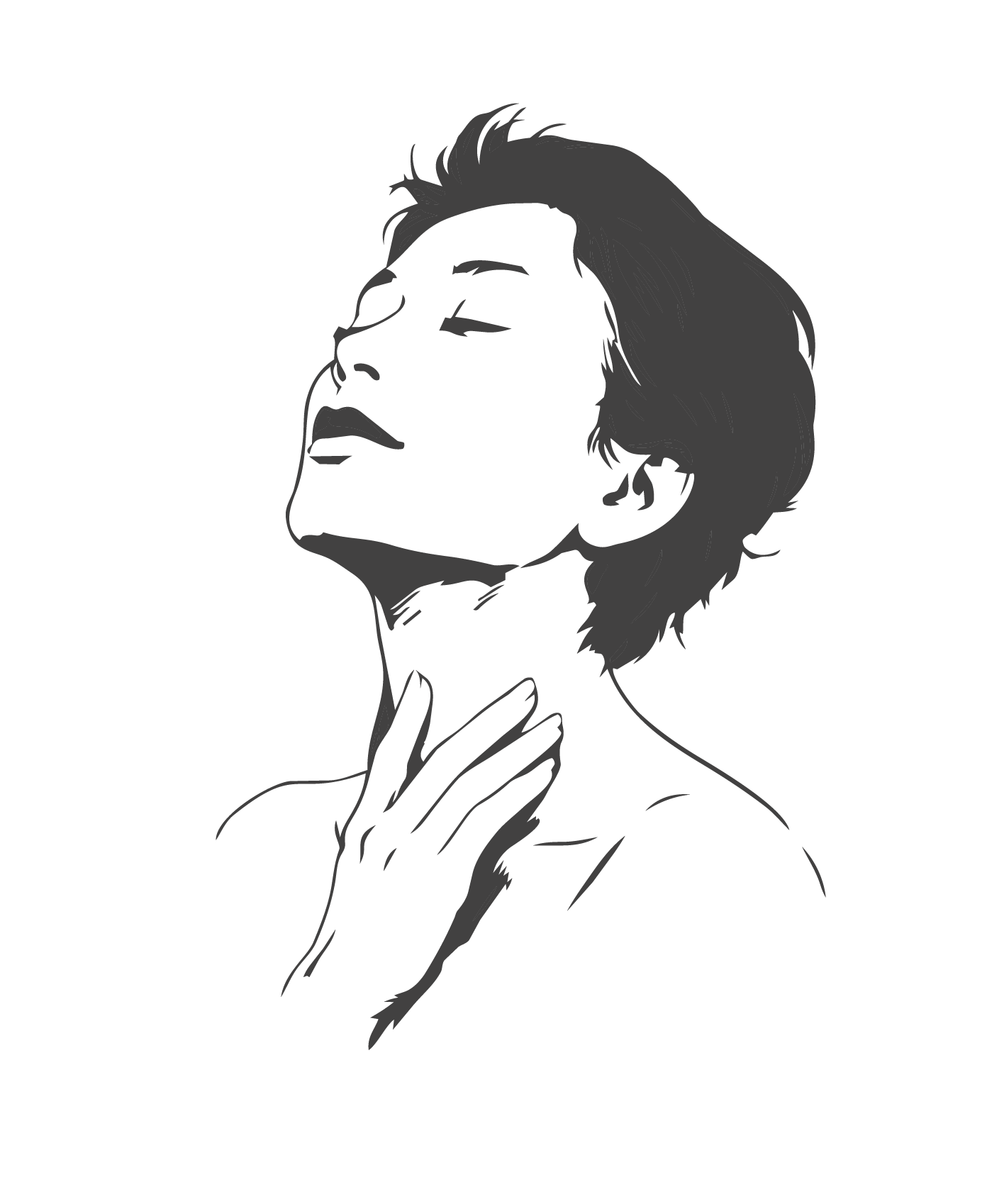
There is a moment, usually late in the day, when a woman can still remember that she used to want things.
Not need them. Not plan them. Want them.
The distinction has become embarrassingly difficult to explain. Her body is in a kitchen. A message waits unanswered. Someone needs a form signed, somebody else wants to know what is for dinner, and the person she loves has asked whether they will have a little time together tonight. A perfectly reasonable question. She feels it land somewhere between her shoulder blades as another item that requires an answer.
She loves this person. She may want them, too. She might even have imagined reaching for them earlier. Yet by the time the question arrives, the wish has changed its temperature. Instead of opening towards another body, something in her starts calculating. How much time? How much energy? What else must be finished first? What will disappointment cost?
Desire has entered a room already occupied by necessity.
It is tempting to call this a sexual problem. It may be one, in part. But consider how much of her life has become a series of obligations to things she also loves. The child she wanted. The work she chose. The home she built. The friend whose crisis matters. Even beauty can become maintenance when there is too little room left to enjoy it.
Eros is not always banished by hatred. Sometimes it is crowded out by everything a woman holds dear.
The other presence in the room
In Greek thought, Eros has several histories. There is the familiar god of erotic attraction, and there are older accounts in which Eros belongs close to the beginnings of creation itself. Ananke, whose name means necessity, also appears in ancient cosmological traditions. In an Orphic account she is associated with Chronos, time, and the ordering constraints through which a world takes shape. These are not parts of one neat romantic fable in which Eros and Ananke appear as lovers. Myth is rarely that convenient.
A different, influential pairing appears in Sigmund Freud’s Civilization and Its Discontents. He used Eros and Ananke, love and necessity, to describe two forces through which communal human life could develop. Freud’s account contains assumptions about men, women and family that deserve scrutiny, not reverent repetition. But the tension he named remains useful: human beings gather because they need one another, and because they love one another. Need and love cooperate. They also compete for room.
In the life of one woman, this is not an abstract theory of civilization. It is Tuesday.
A body that has spent the day meeting demands may not switch into pleasure because the demands have stopped for ten minutes. Nor does a body owe anyone a display of desire to prove that love has survived. There is no moral failure in finding that what was effortless at twenty-seven asks for different conditions at forty-seven, or at thirty-two, or at sixty-three. There is only the need to be more precise.
What is missing here? Attraction? Safety? Privacy? Rest? The permission to want without immediately being responsible for what happens next?
Those questions are not interchangeable. They do not all produce the same answer.
When obligation wears the face of love
Necessity has a legitimate place in life. Infants require feeding. Rent requires payment. Bodies need rest and treatment. Communities only function because someone remembers practical details that cannot be wished away. There is no mature understanding of Eros that pretends otherwise.
But something changes when necessity has no edges.
A request becomes a duty because someone might be upset if it goes unanswered. A duty becomes identity because the woman has always been the one who remembered. Eventually she may no longer distinguish between a real requirement and the expectation that she will anticipate every requirement before anybody else notices it.
Here, Eros often goes quiet long before sexuality disappears. The woman no longer has a preferred restaurant. She cannot answer what she would like to do on a Sunday. She buys a beautiful dress and immediately thinks about whether it is practical. She catches herself planning what another person will enjoy before she has registered whether she is hungry.
This is not proof of trauma. It is not, by itself, evidence of a nervous-system disorder. It is a pattern worth noticing, and the explanations may be multiple: unequal domestic work, chronic stress, medical conditions, depression, relationship conflict, hormonal change, medication, grief, fatigue, or the cumulative weight of being indispensable. There may also be long stretches of life when desire is simply quieter. Not every quiet season conceals a wound.
What matters is the difference between observing that the volume has changed and pronouncing the entire instrument broken.
A woman can say, "I cannot feel what I want right now," without having to conclude, "I am no longer a desiring person."
The first sentence describes an experience. The second tries to make an identity out of it.
The coldness that feels personal
The loss of erotic contact can frighten people precisely because desire feels so much like evidence of being alive. When it recedes, a woman may wonder whether her relationship has become a friendship, whether she is getting older in the wrong way, whether her body has betrayed her, whether every previous expression of wanting was some elaborate performance.
The mind is quick to offer a verdict when a state feels unfamiliar.
The nervous system is involved in sexual experience, but it is not a single switch labelled safe or unsafe. Stress, attention, hormonal changes, sleep, learned expectation, sensory context and relational history all matter. Research on responsive sexual desire, associated with clinician-researcher Rosemary Basson, helped challenge the assumption that desire must always appear spontaneously before intimacy begins. For some people, wanting emerges in conditions of welcome, interest and pleasurable contact. For others, the absence of desire signals that something needs attention rather than further persuasion. Both possibilities deserve respect.
A model of sexual response is a map, not a permission slip to keep touching someone until they change their mind.
Consent is not the price of discovering whether desire might return.
And the return of desire is not the only good outcome. Sometimes the most intimate discovery is a clear no. Sometimes it is a request for more sleep, less noise, a different form of affection, or a long conversation about all the labour nobody has thought to name.
Memory is present even when nobody mentions it
A kitchen is rarely just a kitchen.
The woman standing there may carry the sensory history of a hundred evenings: the sigh that followed a refusal, the tenderness that once appeared after the dishes were done, the mother who did everything without complaint, the first lover who became hurt when she asked to slow down, the extraordinary summer when a simple kiss required nothing afterwards.
Memories are not always narrated. Sometimes they arrive as a prediction: this will become work; this will disappoint someone; this will feel good; this will end badly. Sometimes a posture, a smell or a particular silence calls up a familiar readiness before she can explain it.
That does not mean every bodily reaction is a faithful recording of the past. Memory is reconstructive, perception depends on context, and a sensation cannot tell us on its own what happened or what another person intends. But memory can influence what the present feels like, and that is enough to make it worth including in the conversation.
This is the fourth dimension of our editorial map, not as a physics claim but as a way of refusing a flattened picture of experience. A woman is never only a person in a room at a moment in time. She brings her lived history, her future expectations, her physical state, and the other people and institutions making demands upon her. At the same time, she has capacities that have not been given much space to appear.
The body offers a signal. The mind offers an explanation. Memory supplies familiar evidence. Protection makes a proposal. Desire may open, retreat, or say nothing. None of these voices deserves automatic sovereignty.
Together, they can become a conversation.
What if Eros is not a demand?
Our culture is comfortable with two bad versions of desire. In the first, Eros is something a person must follow because it is authentic. In the second, Eros is something a person should discipline because life has more important work to do.
Neither is especially interested in the woman herself.
Wanting is information. It is neither a legal contract nor a divine command. A longing can carry old hunger, curiosity, play, vanity, loneliness, love, defiance or a wish for a different future. An attraction may be worth noticing and not worth acting upon. A fantasy can make a protected inner space without becoming a demand on another person. The fact that something is erotic does not make it sacred. The fact that something is inconvenient does not make it wrong.
Eros is allowed to be complicated.
This matters especially when the woman is ashamed of what she wants. Perhaps she wants to be alone. Perhaps she wants another woman. Perhaps she wants sex without the role of caretaker. Perhaps she wants the kind of touch she has spent years dismissing as too much to ask. Perhaps, to her considerable surprise, she wants no sex whatsoever for a while and would like everybody to stop treating the silence as a public emergency.
Or perhaps she loves the children she has and sometimes wants an entire week in which nobody calls her mother. These experiences may need different ethical responses. They do not all need to be converted into a confession, pathology or new personal brand.
There is a particular dignity in saying: this has arisen in me, and I can get close enough to understand it before deciding what I owe it.
Necessity can also protect pleasure
Ananke is not the villain in this story. The meal needs to be cooked. Money needs to be earned. Care needs to be coordinated. We cannot abolish human dependency without abolishing much of what makes a shared life worth having.
But the distribution of necessity can change.
We might ask who gets uninterrupted time, whose desires can remain exploratory, who is allowed to be too tired, and who must defend the wish to be unavailable. In many households, these questions are about labour and power as much as psychology. A woman does not become free from structural inequality by improving the quality of her breathing. A nervous-system practice may help her notice what is happening. It cannot by itself renegotiate a workplace contract or redistribute care between adults.
For some women, eros returns with political conditions: a partner taking responsibility without being asked, affordable childcare, financial independence, privacy, accessible healthcare, freedom from violence. For others, it returns with unremarkable conditions: an hour to paint, a bath with the door closed, a walk in which nobody has a question.
And sometimes pleasure does not return on schedule. That is not a moral failure, either.
Ananke, properly met, gives desire a world in which it can survive. A life in which no one tends the practical conditions of care will not become more erotic merely because everyone talks beautifully about freedom.
The task is not to expel necessity. It is to stop letting necessity impersonate the whole of life.
Two truths at the same table
Imagine that evening again. The dishes. The unanswered message. The person who wants a little time together.
Perhaps she says she loves them and cannot be touched tonight. Perhaps they are disappointed and make room for that disappointment without turning it into her debt. Perhaps she finds a way to say that she misses wanting, and that she is frightened by how far away it feels. Perhaps they discover that she has been carrying more than either had named.
Or perhaps no conversation happens. She eats a peach standing at the sink, surprised by the sharpness of its skin against her tongue. For a few seconds the room asks nothing of her. She notices the wanting for another bite. It is small. It is not a revelation. It is also hers.
We are used to looking for dramatic proof that aliveness has returned. A grand affair. A transformation. A new body. An entirely different life.
Sometimes the first evidence is the absence of coercion. A body gets to say no without becoming guilty. A woman notices pleasure without turning it into work. She remembers that there are wishes she is allowed to have before she can explain what they are for.
Eros and Ananke remain at the table. Love and necessity. Appetite and consequence. The life we desire and the life that requires us.
Neither one is leaving.
The interesting question is whether the woman herself gets a chair.
Continue through Transmissions
These experiences do not live in separate rooms. Follow a related conversation:
Research and reading notes
This essay uses Eros and Ananke as a philosophical lens, not as an established model of female sexual functioning. The Orphic cosmology and Freud’s cultural argument are distinct traditions. Clinical descriptions of desire are not substitutes for individual medical or relational assessment.
- Ananke in Orphic traditions, Theoi Greek Mythology
- Sigmund Freud, Civilization and Its Discontents (1930), full translation
- Rosemary Basson, conceptual work on female sexual response, indexed research
- Institute of Inner Technology, Human Capacities
- I AWAKE, the Nine Destinations
- Sensual Institute, Sensual Encyclopedia
A free course to continue
Eros Meets Ananke. Put what calls you beside what life requires. Find one honest movement that respects both desire and real responsibility. Free at the Sensual Institute; account and login required.