
The thought she could not say aloud
The child has been asking the same question for twenty minutes. The mother has answered kindly, then less kindly, then with the sort of voice she used to dislike in adults when she was young. She is trying to finish a task. A message is waiting. Somebody else has left the house. The child asks again.
For one flash of a moment, the woman wants to disappear. Not permanently. Not even dramatically. She wants a door that locks, an afternoon in which nobody knows her name, a hotel where every decision can be made without consulting another person.
Then the child leans against her and something softens. She loves this little person with a force that has surprised her for years. She is also furious about the fact that she cannot finish one uninterrupted thought. She wonders what sort of mother could feel these things within seconds of each other.
An ordinary sort. A complicated sort. A human being who can love someone and resent the conditions in which loving them currently occurs.
The distinction matters because resentment is often treated as a verdict on the relationship. A woman who resents the demands of motherhood may fear that she does not truly love her child. A woman who loves her child may feel that she has no right to complain about the demands. The emotional world is forced into a false choice, and the woman becomes ashamed of information that might have helped her understand what needs to change.
Love is not the absence of limits
Love can be generous, devoted and expansive. It can include tenderness, patience and a fierce commitment to another person’s wellbeing. It cannot eliminate the fact that a body has finite attention, sleep, time and energy. When those resources are used without interruption, even meaningful care can become difficult to bear.
Resentment may appear when a need has been ignored, when work is unequally distributed, when a promise has been broken or when a woman feels she is expected to give more than she can. It may also arise from an unfair expectation that somebody else should make life effortless. A feeling alone cannot tell us which situation is present.
The useful questions are precise. What am I resenting? The child, or the lack of help around the child? A partner’s behaviour, or the fact that I never asked for something I needed? A family responsibility, or the belief that I must be endlessly pleased to perform it? What would need to change for the same act of care to feel more freely chosen?
Sometimes the answer is practical. A second adult needs to take over bedtime. Someone must stop scheduling appointments without asking. The mother needs a period of uninterrupted rest. Sometimes the answer is more difficult: a relationship has become unequal, a woman feels trapped by expectations, or a medical or psychological concern needs attention.
The feeling of resentment is an experience. It can begin the inquiry without being promoted to the final conclusion.
The old picture of a good mother
A good mother is meant to love without calculation. She is told that the child’s needs come first, that devotion is instinctive, that sacrifice is beautiful and that the best moments will make everything worthwhile. There may be truth in each fragment. Together they can form a standard that no living person could inhabit without losing some part of herself.
If the mother enjoys care, she is praised for being natural. If she is exhausted, perhaps she is not coping. If she wants time for work, art, sex or solitude, she may be accused of misplaced priorities. If she sacrifices all of these and becomes bitter, the bitterness may be used as evidence that she has failed to appreciate her own family.
No wonder some women hide their resentment until it arrives as an explosion over a misplaced towel.
We should not replace the ideal of endless devotion with another rigid ideal of perfectly balanced selfhood. Some women genuinely choose intense periods of caregiving. Others are constrained by circumstances. A woman may decide that this season of her life belongs primarily to a child and still require support, recognition and permission to have difficult feelings.
A choice does not turn every consequence into something she must enjoy.
The body keeps an unofficial account
A woman may tell herself that everything is fine while her body has started responding differently to ordinary requests. She hears footsteps approaching and feels irritation before the person speaks. She becomes tense when a partner reaches for affection because she anticipates another demand. She begins fantasising about being alone for no reason more dramatic than the relief of not being needed.
Such reactions can be clues about accumulated load, but they are not diagnoses. Stress, sleep loss, pain, anxiety, family history and specific relationship patterns can influence bodily experience. A person may also misread a neutral situation when tired or frightened. The nervous system participates in the experience; it does not issue a complete, infallible explanation.
Still, the shift deserves curiosity. When did touch begin to feel like interruption? What happens when nobody asks anything for an hour? Does the irritation lessen with rest, or does it return at the same relational pattern? Which requests are genuinely necessary, and which have become habitual because she usually agrees?
Sometimes the body’s answer is embarrassingly simple: she needs food, sleep, quiet, or a different division of responsibility. Sometimes the answer is not simple at all. Respecting the experience means refusing both shortcuts.
A child cannot be responsible for the adult world
It is one thing to admit resentment. It is another to place its full weight on a child. Children depend on adults, and they should not be made responsible for regulating a parent’s distress or solving structural problems around care. The mother’s need for relief is real; so is the child’s need for safety and developmentally appropriate support.
When a woman snaps, repair matters. She can acknowledge that she spoke harshly, reassure the child that the adult is responsible for the adult’s behaviour, and seek whatever practical changes might reduce repeated overload. She does not have to deliver a long confession about the private complexity of motherhood to someone too young to hold it.
The work with partners, friends and other adults is different. There, the woman can describe the distribution of responsibility, the demands she cannot sustain and the mixed feelings that have been accumulating. If a family system is placing too much on one person, the burden needs to move, not simply be reframed as a problem of attitude.
Love does not mean the mother never loses patience. It does require taking seriously the effect of her actions and seeking repair when harm occurs.
When the partner gets the cheerful version
Some resentment grows in the space between what one person sees and what the other lives. A partner returns home and encounters the family in the evening, perhaps after a day of demanding paid work. The mother has been carrying a series of invisible decisions since morning. The partner asks an ordinary question, and she reacts as though it were a personal insult.
Both may feel misunderstood. One does not see the accumulated work; the other does not feel seen inside it. They begin arguing about tone, gratitude or whether the house was sufficiently tidy. The underlying issue remains: who is responsible for remembering, deciding, anticipating and recovering when things go wrong?
Sociologist Allison Daminger’s work on cognitive household labour offers a useful distinction between visible tasks and the mental processes that keep them organised. The detail matters because a person may perform chores yet leave the planning and monitoring entirely to someone else.
A practical conversation might ask not merely who washes the clothes, but who notices that a child has no clean clothes for tomorrow. Not who attends the appointment, but who arranges it. Not who helps when asked, but who takes responsibility without requiring the exhausted person to remain project manager.
Resentment may become less mysterious when the work becomes visible. It may also reveal disagreements about values and priorities that require more than a new checklist.
The grief beneath the irritation
Sometimes a woman resents what she has lost. The freedom to leave the house on a whim. The ease of sexual intimacy. Time alone with a partner. The career opportunity that became impossible, the project that waits in a drawer, the silence she once took for granted.
She may have chosen motherhood wholeheartedly. She may adore the life she has. Neither fact eliminates the grief for alternatives that did not occur. A chosen future can still contain unlived futures. The person who might have existed in those lives is not necessarily better or more authentic. She is a possibility worth acknowledging without turning the current life into a mistake.
The grief can intensify when a child reaches a new stage. The mother celebrates independence and feels an ache for the smaller person who needed her in a different way. She may resent the demands of the present and mourn them when they disappear. This is not proof that she is impossible to please. It is part of living in time.
The mind holds memory and imagination alongside current experience. A woman’s life does not arrange itself into one simple emotional argument about whether the path she took was correct.
Resentment is not a secret wish to harm
Women sometimes fear their own difficult thoughts. They imagine leaving, being alone, hearing nobody call their name. A fleeting fantasy may be a way of representing a need for rest or freedom. It does not necessarily express a plan or a desire to abandon people they love.
That distinction cannot be used to dismiss serious risk, of course. If a person has thoughts of harming herself or others, or feels unable to maintain safety, she deserves urgent professional support. But we should not equate every unwelcome feeling or fantasy with action. The mind can represent possibilities without choosing them.
A mother may be able to speak more honestly when she is not immediately judged by the harshest possible interpretation. ‘I wanted to disappear for an hour’ can mean exactly that. A room capable of hearing it without panic or moral correction may help her find the practical need beneath the sentence.
Not every difficult experience needs to be confessed publicly. Privacy and judgment matter. But a woman should not be driven into isolation simply because the emotional reality of her life is more complex than a greeting card allows.
Joy makes no accusation
There may be days of extraordinary tenderness. The child holds her hand. Someone says something unexpectedly wise. A normal afternoon becomes luminous for no clear reason. The woman is overwhelmed by the size of her love.
That joy is not evidence against the earlier resentment. Nor must resentment remain dominant because it was sincere. Experiences can coexist without cancelling each other. Their movement is part of the human condition, not a moral inconsistency that needs correcting.
A woman may learn to recognise small reliefs without demanding that they solve every difficulty. An afternoon with a friend. A night in which a partner takes responsibility. A child becoming more independent. A work project finally completed. Such changes can create room for pleasure while larger structural problems remain.
The point is not to produce the correct emotional blend. It is to notice what is present and what the situation actually requires. Some things require gratitude. Some require rest. Some require negotiation, care, grief, joy or a very clear no.
The conversation that matters
Imagine a mother saying to someone she trusts, ‘I love them, and I am resentful.’ The listener does not correct her. Instead, they ask, ‘What part has become too much?’ The question is small but transformative. It allows the emotion to become an experience with context rather than evidence that the woman has failed at love.
The answer might be surprising. She resents being touched all day and then expected to want more touch at night. She resents the fact that her partner can leave the house without a plan. She resents her own habit of volunteering before anyone else has offered. She resents the silence around money. Or she simply needs several nights of sleep.
Some answers can become negotiations. Others reveal things that may need professional help or social support. The important movement is from moral judgment to specificity. A person can become intimate with her actual experience because she no longer has to defend herself against an identity accusation.
This does not guarantee that every relationship will become fair. It makes the right conversation more possible.
Two truths in one embrace
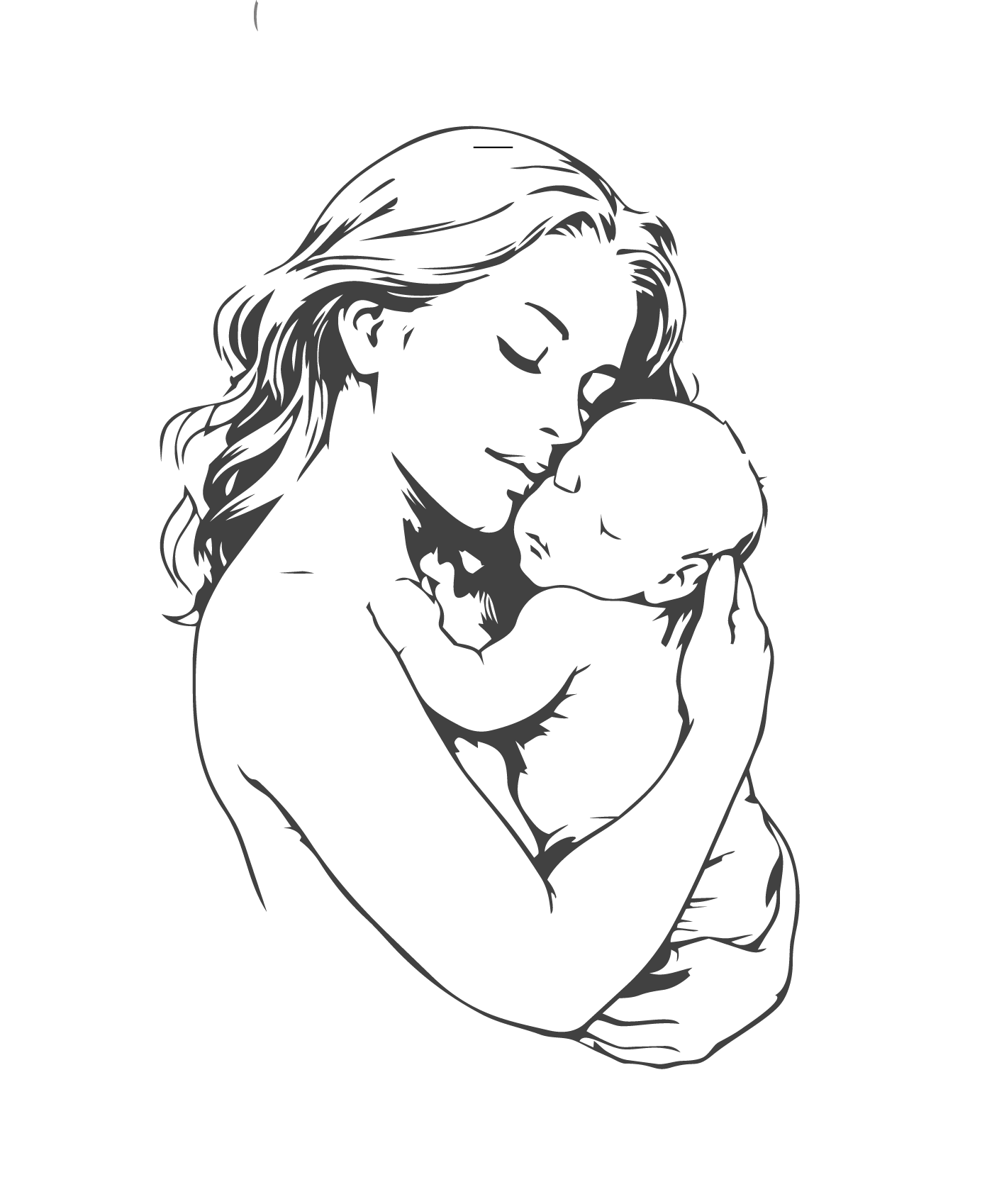
The child returns to the room. The mother is still tired. The task remains unfinished. She puts an arm around the little person and feels a rush of love, followed by impatience because the laptop has begun making a warning sound. The feelings are not neatly arranged. They do not need to be.
She is not a loving mother in one moment and an unloving mother in the next. She is a woman who loves her child and has limits, a history, a body and a life that cannot be reduced to one relationship, however important that relationship is.
Resentment can be a signal to examine care, fairness and loss. It can also be mistaken, disproportionate or temporary. It deserves inquiry rather than worship or condemnation.
Love has room for much more than the ideal version of itself. So does the woman who carries it.
Research and connected reading
- Allison Daminger, The Cognitive Dimension of Household Labor (2019). Distinguishes cognitive responsibility from visible chores.
- The Hours Nobody Counts. On the distribution of invisible care.
- Joy Is Not a Betrayal of What Hurts. On the coexistence of delight and difficulty.
- The Astonishing Excess of Love. On tenderness and the social nature of devotion.
- Institute of Inner Technology, Human Capacities. Further concepts concerning care, agency and relation.
The examples are illustrative. The essay does not diagnose a family or suggest that every difficult feeling is harmless; safety and appropriate care take priority where necessary.
A free course to continue
Love and Resentment Can Share a Body
Make room for devotion and strain in the same experience. Name an unmet need and turn it into a concrete request. Free at the Sensual Institute; account and login required.