
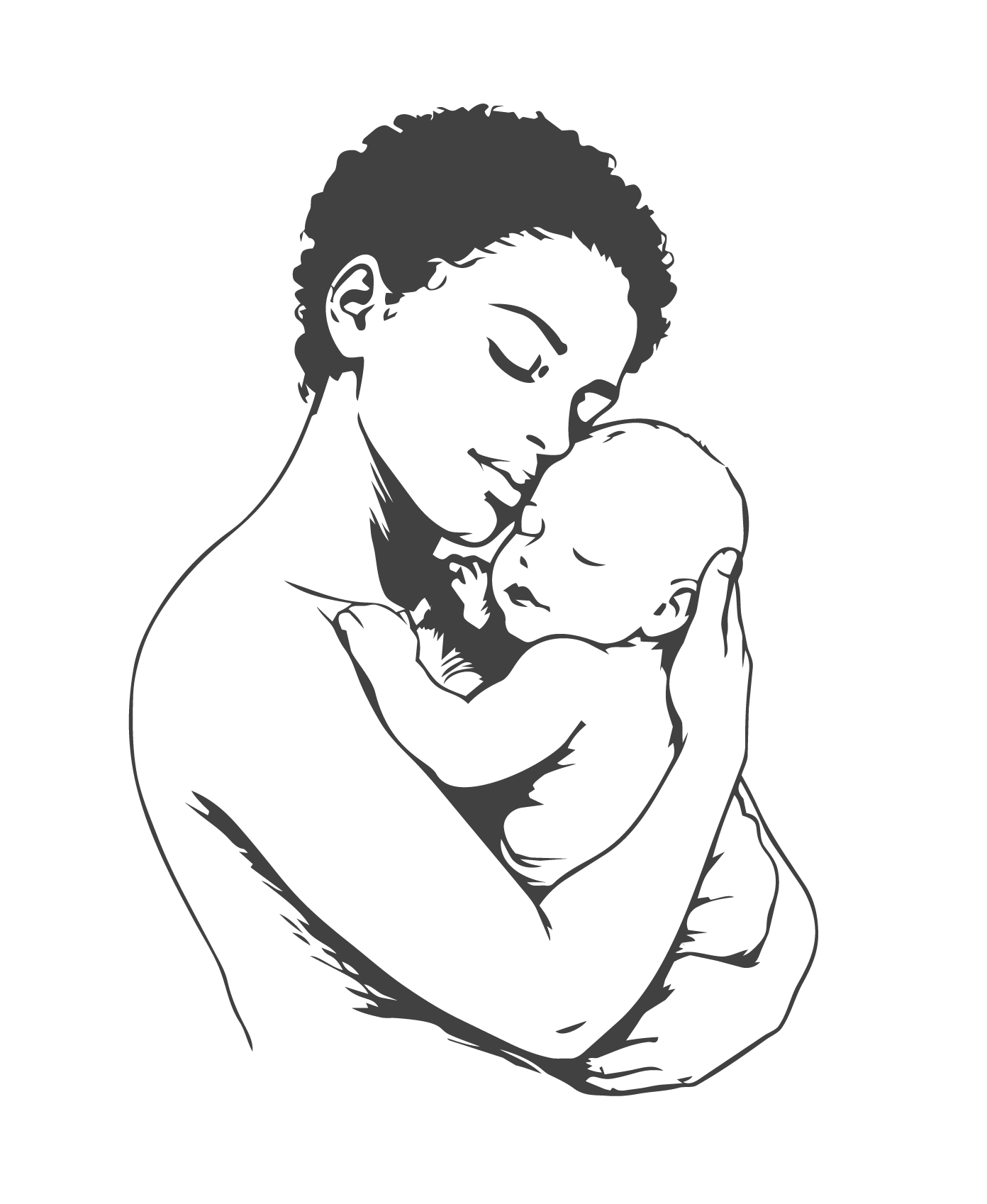
She just knows
A father is holding a crying baby while two women hover nearby. He looks exhausted, bewildered and entirely sincere. One woman says, Give her to her mother. She’ll know what to do.
The baby’s mother is standing in the kitchen wondering what to do herself. She has slept in scraps. Her shoulders hurt. She has already tried feeding, changing and singing. The baby is still crying because babies sometimes cry, and because the capacity to understand another human being does not arrive in a beautifully wrapped parcel on the day of birth.
Still, everybody looks at her as though the answer is hidden inside a special compartment of her body.
She takes the baby. Someone says, See? It’s instinct.
It is not clear what they have seen. The baby may have quieted at the sound of a familiar voice, or because of a different position, or because the episode was about to end. The woman may have developed useful knowledge through hundreds of small encounters. She may also be guessing.
The point is not to deny the real biology of pregnancy, birth and lactation. It is to question a very peculiar social habit: explaining the labour of caring as though women simply exhale it.
An instinct can become an invoice
When somebody says that care comes naturally to women, the sentence may sound admiring. It can also have a practical consequence. If the task is natural to her, then it is less costly. If she is naturally attentive, nobody needs to teach another person to be attentive. If she is naturally patient, then her exhaustion can be interpreted as a failure to live up to her own nature.
A compliment becomes a quiet invoice.
It is convenient to declare someone gifted at a form of work that other people would rather not perform. Nobody wants to learn all the details of a household schedule if someone else can be presumed to possess an innate domestic radar.
A woman may indeed be skilled at care. She may have learned to anticipate a child’s distress, notice when an older parent is confused, and recognise the particular tone that means a friend is not doing well. These are real capacities. They have histories. Many were developed through repetition and attention, not handed down as fixed privileges of a sex.
There is also no uniform response to caregiving. Some women feel immediate confidence with infants. Others feel bewildered, frightened, indifferent, tender and overwhelmed in changing proportions. Some people who have never given birth are extraordinary carers. Others do not want to care for children at all. We should not make a universal psychological law from one appealing domestic scene.
The biology is real and does not finish the argument
It would be equally dishonest to pretend that biology is irrelevant. Pregnancy can alter bodies profoundly. Lactation can create particular rhythms of dependence. Sleep, pain, hormones and recovery influence what an individual woman is able to experience and do. Different routes to parenthood carry different bodily demands.
But biological difference does not automatically specify the best possible social organisation of care. A person who can lactate may take a greater role in feeding an infant, depending on the circumstances. It does not follow that she must also carry the shopping, family calendar, emotional monitoring, relatives’ birthdays and every future school form.
The leap from one bodily fact to a whole domestic job description is where the politics slips in.
Anthropologist Sarah Blaffer Hrdy has explored the importance of shared caregiving and cooperative arrangements in human evolutionary histories. Her work complicates the image of the isolated mother as the sole naturally competent provider. No single anthropological account can dictate how a modern family should live, but it is worth remembering that human care has rarely been a one-woman operation.
The child’s needs are real. So are the mother’s. Neither reality becomes less important because we are discussing social expectations.
Who taught you how to notice?
Consider a family where two adults both want to care well for a baby. One spends more time learning the infant’s rhythms. The other returns to a demanding job. A few months later, the first adult can recognise a tired cry more quickly and knows where the spare clothes are kept. The second feels clumsy.
The family concludes that the first has better instincts.
Perhaps. But they have also received different amounts of practice.
To learn a human being is a form of attention. It is repeated, specific and sometimes extremely tedious. You learn that a particular face precedes hunger, that a song helps at four in the morning, that a favourite book is wanted again and again when the child feels unwell. You become more capable partly because you have been there for hundreds of small moments.
A parent who spends less time in those moments may need time, confidence and permission to learn. If every imperfect attempt is met with, Never mind, give her to me, the family may inadvertently train one person out of participation while training the other into indispensable exhaustion.
This is not an argument for leaving a child with an unsafe or neglectful carer. It is an argument for taking learning seriously instead of treating ordinary beginner difficulties as proof of fixed maternal superiority.
A person’s future skill should not be decided by the first week in which they feel awkward.
The woman who doesn’t feel maternal
There is particular cruelty in the expectation that every woman should experience care as an immediate and unmistakable calling. Some women do not want children. Others want them and find the early period bewildering. Some love a child fiercely but dislike large portions of the work. Some struggle with postpartum mental health or physical recovery. Some discover that the familiar script of the fulfilled mother does not fit their experience at all.
None of these conditions can be understood by telling a woman that her instincts are missing.
Significant emotional distress after birth may require clinical support, and it should not be reduced to a crisis of identity or confidence. ACOG’s guidance on postpartum care treats the period as an ongoing process in which physical, social and psychological wellbeing deserve attention. That is a more useful starting point than the idea that every mother ought to know what she is doing because she is a mother.
A woman can feel profound love and still need practical instruction. She can be uncertain and remain capable of growing into an excellent relationship with her child. She can also decide that parenting is not part of the life she wants and remain entirely a woman.
It is time to stop using the word natural as a substitute for listening.
When love becomes a competence test
Imagine a mother returning to work while her child is still very young. She has arranged dependable care. She has thought carefully about the people involved and the needs of the child. Still, a relative asks, Doesn’t it break your heart to leave her?
The question may be affectionate, but it contains a test. If she says yes, she appears loving and perhaps irresponsible for going. If she says no, she risks appearing insufficiently maternal. The acceptable response is an exquisite combination of anguish and gratitude, carefully performed at exactly the right intensity.
There is no equivalent standard script for every father leaving for work.
A woman’s experience should not have to be translated into an authorised emotional display. She may miss her child desperately. She may be delighted to return to work. She may feel both. She may have financial obligations and no meaningful choice. Every one of these situations deserves its own account.
The myth of natural care makes such differences difficult to speak about because it presumes a single correct emotional response. Motherhood becomes not only work but a continuous public test of authenticity.
You cannot pass a test when the answer changes every time the child cries.
Learning care without being consumed by it
There is a better way to talk about care. We can recognise it as embodied, relational skill that develops through lived contact and is shaped by material conditions. The capacity is shared, unevenly practiced, sometimes constrained and frequently undervalued.
A family could ask who needs to learn which tasks. Who is doing the anticipating? Who has opportunities to rest? Who can be confidently alone with the child, and where might extra support be needed? Who is carrying guilt that would be better replaced by a clear agreement?
These questions are more useful than arguing about which parent possesses a mysterious greater quantity of instinct.
There will still be unequal situations. A recovering birth parent may need substantial support. A disabled parent may require assistance with tasks that others can manage unaided. A family with one primary carer may decide that arrangement works well. The point is not that every household should look identical. It is that its arrangement should be seen, discussed and revised rather than disguised as destiny.
The same principle matters beyond children. Women are often expected to care for parents, colleagues, neighbours and partners with a kind of effortless emotional availability. The ability to recognise another person’s needs is beautiful. The presumption that a woman must always act on those needs is something else.
The relief of being allowed to learn
Return to the crying baby. The father has been trying to settle her. The mother is exhausted. Instead of automatically transferring the baby, they both ask what might help. Perhaps the infant is hungry. Perhaps a position is uncomfortable. Perhaps one parent needs to step away and the other needs another ten minutes to learn what works.
There is no competition to establish which adult is the authentic parent. There is a baby with a particular need and several imperfect human beings attempting to meet it.
The mother may want to take her child because she loves holding her. She may want a shower and twenty minutes alone. She may be unsure. Her answer does not decide her status as a good woman.
Mother is a wide territory. It holds astonishing love, complicated attachment, the daily work of provision, grief, laughter, sometimes resentment and a great deal of learning by trial and error.
Care is not less meaningful because it requires work. It may be more meaningful when the work can be named and shared.
And a woman is not less capable of love because there are mornings when she cannot bear to be the person who automatically knows what to do.
Connected reading
- The Other Birth: Becoming Someone’s Mother, on the slow emergence of a parental relationship.
- Who Holds the Woman Who Holds Everyone?, on the cost of being presumed infinitely competent.
- The Hours Nobody Counts, on invisible cognitive labour.
- The Sensual Institute, for wider resources on embodied experience and relational life.
This essay challenges social stereotypes without denying bodily differences or individual variation. Postpartum mental and physical health concerns deserve professional assessment rather than appeals to instinct.
A free course to continue
Whose Needs Are You Already Carrying?
Make the anticipating, remembering and organising visible. Choose one responsibility to share, renegotiate or safely delay. Free at the Sensual Institute; account and login required.