
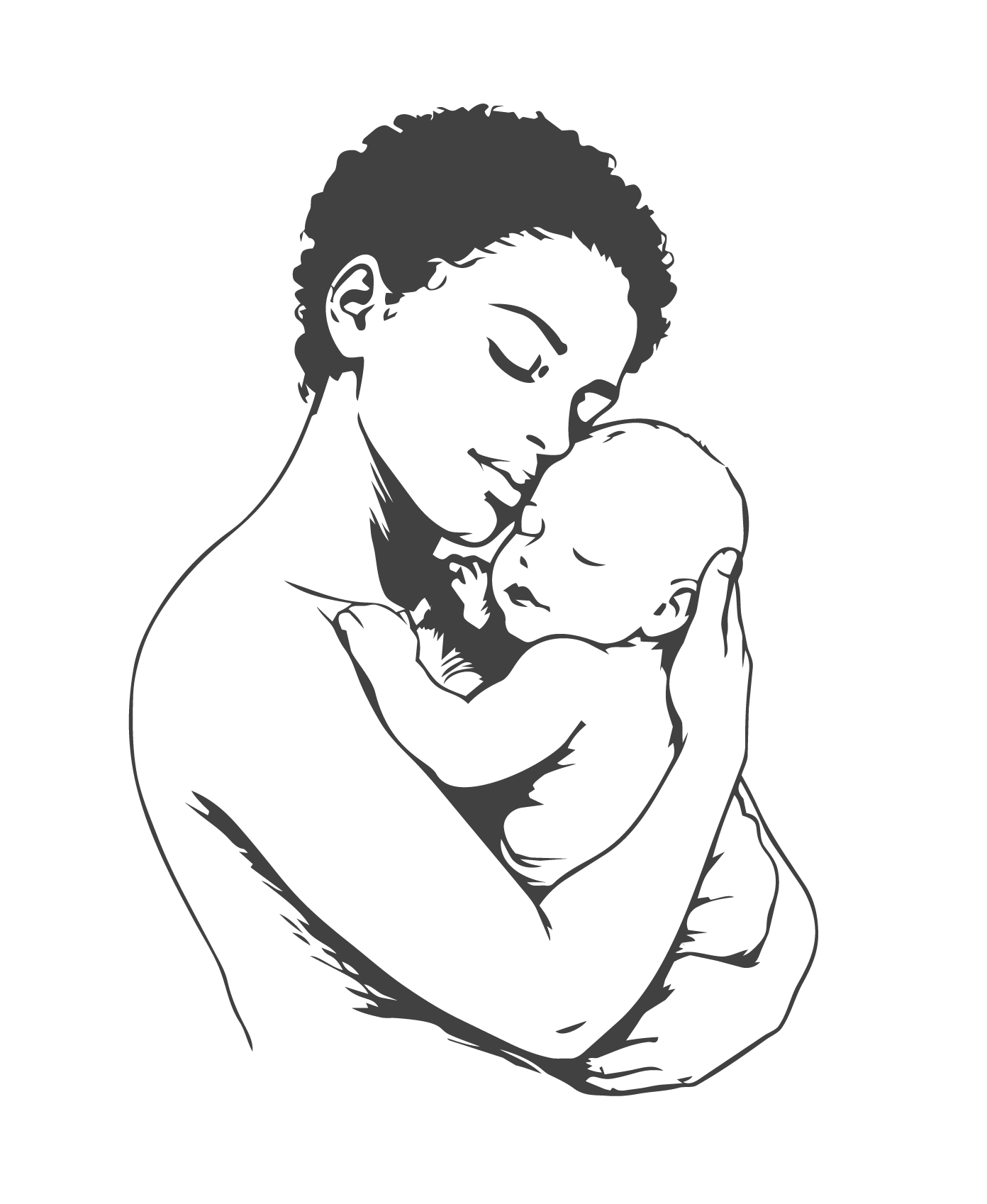
A word you recognise, a person you don’t
The first time someone calls her ‘Mum’ in a place where she does not expect it, she looks behind her. The nurse is talking to her. Or the school receptionist, several years later. Or a stranger in a shop who has watched a small child reach for her hand. The word is entirely accurate, yet it can feel as though a new character has been introduced before the woman has read the script.
She is somebody’s mother. She may have wanted this for years. She may have entered the role unexpectedly or through a route that involved loss, adoption, partnership or complicated decisions. She may be delighted beyond anything she previously knew. Still, the word can reach her before her sense of self has caught up with what it means.
A child has arrived in her life, and other people have begun speaking to her as though the transformation is complete. They ask what kind of mother she is, how she plans to raise the child, whether she will return to work, what she has decided about feeding, sleeping, discipline, education and a future that has not happened yet.
The woman may know more about the child each day and feel less fluent in the question of who she is becoming. That is not necessarily a crisis. It may be the ordinary strangeness of a life altering its shape while it is still being lived.
Development does not stop at adulthood
We tend to speak about identity development as though it belongs to adolescence, and then adulthood arrives with a person finally assembled. But major relationships and responsibilities can continue changing our habits, priorities, social position and sense of self. Parenthood is one such transformation, though it is not the only one.
The term matrescence has been used to describe the transition into motherhood as a process involving psychological, physical, social and relational change. Its value is partly conceptual: it gives language to something that is often assumed to be instantaneous. A recent sociocultural account by Cassie Blom and Soma Sen discusses maternal identity within wider social structures, reminding readers that development is not merely a private mental adjustment.
A developmental framework can be useful without becoming another compulsory timetable. Some women feel a strong maternal identity immediately. Some experience it gradually. Some are unsure what the label means after years of caring. A woman may become a mother through birth, adoption or another lasting caregiving relationship, each with different conditions. Others do not become mothers and are not missing a required developmental stage.
The central insight is that the role is lived over time. You are not handed a finished version of yourself with the child. You discover what the relationship asks, how you respond, where old capacities fit and what unexpected parts of you become visible.
The child is not a mirror
A newborn can feel like an extension of the mother’s body, especially after pregnancy and birth. The intimacy may be extraordinary. But the child is also a person who will increasingly have preferences, reactions, relationships and a world not organised around the mother’s image of herself.
A mother may be thrilled when the child resembles her and unsettled when the child’s interests differ radically. She may recognise herself in a particular fear or delight, then discover that the child responds to the situation in an entirely unfamiliar way. The bond grows partly through this continuous encounter with another subject.
This matters because motherhood can easily become an identity project. The child’s success appears to prove that the mother is competent; the child’s difficulty appears to demonstrate her failure. A school report becomes a personal evaluation. A child’s sadness can feel like an accusation. A moment of independence can be celebrated and mourned simultaneously.
A child needs care, but does not exist to complete the mother’s sense of worth. The mother can be deeply responsible without assuming authorship of every future feeling or choice. That distinction may take years to become emotionally believable.
The love is not diminished by recognising separateness. Sometimes it becomes freer, more curious, more capable of meeting the actual person rather than the child imagined before birth.
The old self comes along
A woman does not begin motherhood with an empty history. She brings the person who once wanted to travel, the person who loved work, the person who feared intimacy, the person who could spend an entire Sunday reading. She brings remembered parents, the ways she was comforted or misunderstood, the family arguments nobody has quite resolved.
Sometimes the arrival of a child activates memories whose force surprises her. She hears herself speaking in a tone that belongs to an earlier generation. She notices a tenderness she did not receive. She discovers a fear about safety that had not previously occupied much of her attention.
Memory is not a secret code that explains every act of parenting. A woman may repeat a family habit because it is useful, or because she is tired, or because she has not yet considered another way. She may react strongly to a situation that resembles an earlier hurt. Neither the similarity nor the reaction establishes a complete causal story.
The four-dimensional experience becomes vivid: present care, remembered childhood, relationships unfolding now and imagined futures all occupy the same life. A mother can love her own mother and need to parent differently. She can recognise an old fear without turning it into a lifelong identity. She can grieve the woman she was and remain curious about the woman she is becoming.
The joyful expansion nobody can schedule
There is another side to this transition that deserves more space than the dutiful word ‘bonding’ provides. A mother may find that the world has become almost unbearably interesting. The child’s delight in a puddle, the first laugh, the concentration required to examine an orange peel. Familiar things acquire new dimensions because another person is encountering them for the first time.
The woman may feel that she has been introduced to time from a different angle. Days still pass, but now the future includes the possibility that the child will remember this room, this song, this small moment when they were held. Mortality becomes both more frightening and more intimately connected to continuity.
That joy can be chaotic and ridiculous. A woman may sit on the floor making animal noises with a conviction she would never have brought to a professional meeting. She may feel the most extraordinary tenderness while covered in something unpleasant. The person she is becoming can be less socially composed and more alive than she had imagined.
Not every mother feels this sense of expansion, and it is not a standard against which anyone should be measured. But when it occurs, it should be allowed to remain a real, complicated delight rather than being treated solely as compensation for sacrifice.
The identity tax of being necessary
As the role becomes familiar, others may stop seeing the effort involved. A mother is the one who knows, remembers, anticipates and carries. She may be praised for having everything under control while privately wondering whether anyone can still see her outside the tasks.
The danger is not only exhaustion. It is that usefulness becomes the basis of self-recognition. The woman may feel most secure when somebody needs her. Rest becomes uncomfortable because she cannot measure its value. A child taking responsibility for themselves can bring relief and an unexpected ache, as though love were becoming less necessary.
There is tenderness inside this pattern. Being needed by someone we love can be profoundly meaningful. But need is not the only form of connection. The relationship may mature through curiosity, shared humour, respectful difference and the growing ability to enjoy another person’s autonomy.
A mother may need other places to exist: friendships that remember her past, work or art that interests her, solitude, erotic life, study, places where she is not first introduced through the relationship to her child. Those dimensions do not compete with motherhood. They help keep the person inhabiting it available to a richer life.
The people who think they know the mother
Once the role is visible, advice arrives in astonishing quantities. Relatives, professionals, strangers, platforms and people who have never met the child may offer confident instructions about what a good mother does. Some advice is useful and evidence-based. Some reflects cultural preference or personal anxiety. Some is simply a way of policing women’s choices.
She may be told to trust her instincts and simultaneously ignore them in favour of a fashionable theory. She may be praised for attachment and criticised for being too attentive. She may be told to preserve her independence while being judged whenever she leaves the child with someone else.
A mother can benefit from professional guidance without surrendering the right to ask about evidence. She can learn from more experienced people without accepting that every personal anecdote applies to her child. She can recognise the limits of her own knowledge without turning uncertainty into a permanent verdict about her competence.
The question is not whether she is the perfect mother. There is no coherent definition that would survive the variety of children and circumstances. The question is how she can remain responsive, accountable and capable of learning inside a relationship that will never stop changing.
When motherhood does not feel like a revelation
There are women who look at their child and feel love but not the expected transformation. Others feel fear, sadness, disconnection or numbness. Some experience serious postpartum depression, anxiety or trauma-related symptoms that deserve professional assessment and support. Others simply discover that the cultural promise of instant identity does not match their actual experience.
We should not collapse these situations into one narrative. A slow-growing sense of identity is not necessarily an illness. A significant health concern should not be romanticised as ordinary matrescence. Individual circumstances, severity, duration and wellbeing matter.
This is why it can be so helpful to hear another woman say something honest without correcting it. ‘I did not immediately feel like a mother.’ ‘I loved my baby and missed my old life.’ ‘The change was wonderful, and I was terrified.’ Each statement can exist without needing to represent all mothers.
A person can have an experience without becoming an identity defined by it. The woman who felt numb one afternoon is not ‘the numb mother’. She is a person whose experience deserves curiosity and, where needed, care.
Growing into and out of the role
Motherhood changes again as children grow. The parent of a toddler is not doing the same work as the parent of a teenager. A woman caring for an adult child with substantial needs may encounter responsibilities unfamiliar to friends whose children have become more independent. Some relationships become close and collaborative; others endure conflict or estrangement.
The role does not simply increase in intensity. It transforms. There may be years when the mother is central to every ordinary decision, followed by years in which she must learn to remain present without managing the outcome. There may be grief at each change, including changes that are deeply wanted.
It is possible to miss the little child while loving the person who has grown. It is possible to feel relief when a responsibility ends and still feel lost without it. No developmental theory can eliminate those contradictions. They are part of living with time.
And the mother remains a person who can continue becoming. The role may occupy an enormous place in her life, but it cannot exhaust all that she is.
The word becomes her own
Years later, she may hear someone say ‘Mum’ and respond without hesitation. The word fits. It contains a history of mornings, illnesses, laughter, arguments, repairs and the thousand small ordinary acts through which care became a relationship.
But even then it does not describe the whole woman. She may still be surprised by her own desires, uncertain about her capacities, moved by an old song or anxious about a new future. Motherhood did not finish making her into a person. She was already one, and she continues.
The other birth is not a single transformation. It is the long, untidy process of discovering how another life can become part of yours without every other dimension being extinguished.
The word ‘mother’ can become meaningful without becoming a cage. She can answer to it, love what it contains and remain more than the role.
Research and connected reading
- Cassie Blom and Soma Sen, Reframing Maternal Distress: A Sociocultural Model of Identity Formation in Matrescence (2026). A recent conceptual model; not a clinical diagnostic tool.
- ACOG, Optimizing Postpartum Care. Guidance on maternal health and adjustment after birth.
- The Cost No One Put on the Birth Plan. The material and bodily conditions of the transition.
- The Astonishing Excess of Love. On tenderness, awe and care.
- Sisterhood Is Not a Luxury. The role of reciprocal relationships outside the mother-child pair.
The scenes are illustrative. Identity changes and health symptoms require different kinds of attention; this essay does not offer diagnosis or treatment.
A free course to continue
Whose Needs Are You Already Carrying?
Make the anticipating, remembering and organising visible. Choose one responsibility to share, renegotiate or safely delay. Free at the Sensual Institute; account and login required.