
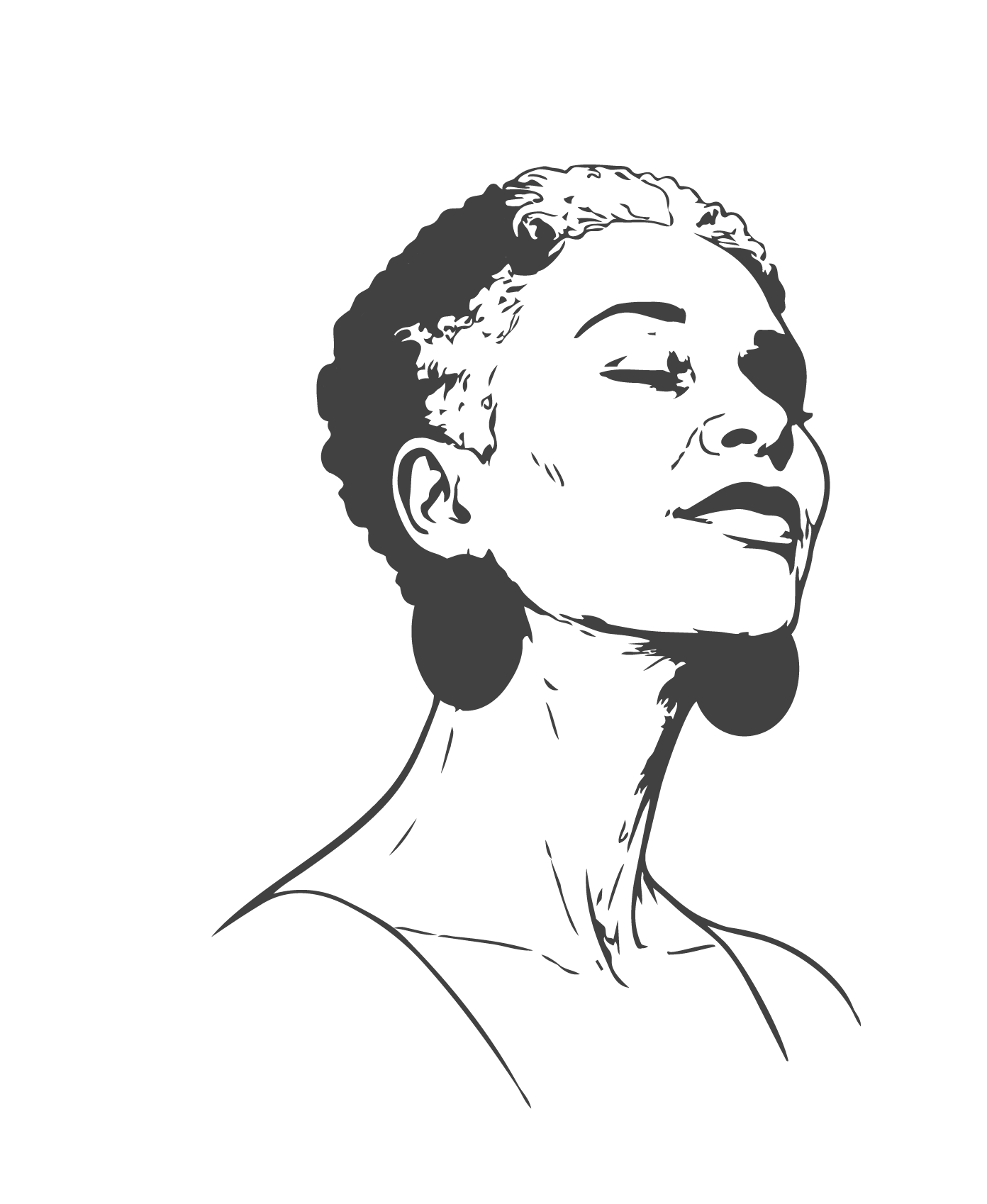
The unopened book
There is a novel on the bedside table. The woman bought it because she once loved books of this kind. The cover is beautiful. The reviews are excellent. Every evening she picks it up and puts it down again.
She cannot say that she dislikes it. Dislike would at least be a feeling. It simply fails to reach her.
Her friends are organising a weekend away. She looks at the photographs of the hotel. Nothing moves. A favourite song plays in the car, and she finds herself waiting for it to end. The garden is full of late roses. She notices that they are roses, registers their colour, and continues walking.
It is tempting to make this into a dramatic description of the soul. The woman has lost her joy. The Crone has entered a dark passage. Her old identity is dissolving so something new may emerge.
Perhaps. But a person who feels nothing may also be exhausted, grieving, depressed, unwell, affected by medication, or moving through a difficult hormonal transition. These possibilities deserve more respect than an elegant metaphor.
Blankness is an experience. It is not the name of her future.
The difference between quiet and empty
Some people experience periods of reduced stimulation as welcome. After years of noise, drama and obligation, the absence of urgent wanting can feel like peace. A woman may stop enjoying social events she never really liked and discover the relief of ordinary quiet.
That is different from distressing loss of interest in activities she previously enjoyed, or a pervasive inability to feel pleasure. Clinicians sometimes use the term anhedonia for diminished interest or pleasure, and it can occur in depression and other conditions. The term is descriptive, not a diagnosis to be assigned from an essay.
The difference may not be obvious immediately. Both experiences can begin with a woman turning down invitations. One feels like a boundary. The other may feel like a room where the lights have gone out.
Even that image is only an image. People vary enormously in how they describe these states.
A careful question might be: Is the quiet nourishing, or does it concern you that things you care about have become unreachable?
We should never presume that a woman is failing because she does not want the same pleasures she wanted at twenty-five. We should also never praise a distressing loss of pleasure as enlightened detachment.
Menopause is not a complete explanation
The transition around menopause can involve changes in sleep, mood, cognition, temperature regulation, sexual functioning and physical comfort. Symptoms differ widely, and their impact depends on health, context and treatment options. The World Health Organization’s menopause fact sheet describes this diversity; it does not reduce every midlife difficulty to hormones.
A woman can experience low mood during this period for reasons linked to sleep disturbance, changes in health, relationship stress, bereavement, work or many other factors. Sometimes several operate together. The temptation to blame or dismiss all symptoms as menopause can delay care for another condition.
Conversely, ignoring menopause as a possible contributing factor can also leave somebody struggling unnecessarily.
Persistent lack of interest, especially with changes in sleep, appetite, energy or hopelessness, warrants a conversation with a qualified clinician. In Sweden, 1177 provides healthcare information and access guidance. When there are urgent safety concerns or thoughts of self-harm, urgent professional support is appropriate.
This is not a failure of the Crone to become wise. It is a person who deserves care.
When the system has spent everything
Consider another possibility. The woman has spent years responding to demands. Children, work, parents, appointments, crises. She may no longer know how to experience a free afternoon except as an opportunity to catch up.
Then one day the responsibilities lessen. A child moves away. A project ends. A parent dies. Everyone tells her she should enjoy the freedom.
Instead she feels strange and flat.
We sometimes expect rest to produce immediate pleasure. The nervous system is not a vending machine. Habit, attention, fatigue and the meaning of a changed role may take time to reorganise. That does not establish a particular biological mechanism or imply that we can diagnose somebody from her history.
A person who has used usefulness as the main route to belonging may also find unstructured time unsettling. The familiar question What do they need from me? has gone quiet. Another question has not yet formed.
This can be a period of exploration. It can also be a clinical problem. The distinction requires attention rather than romantic certainty.
The shame of having no story
It can be remarkably difficult to tell another person that nothing feels interesting.
We know the socially acceptable scripts. Busy but good. Going through a transition. Rediscovering myself. Taking time to recharge. The words are available before the experience has been understood.
But what if the honest answer is, "I don’t know. I used to like things. Right now I don’t particularly like anything"?
Some people respond by offering solutions: take up painting, join a class, meet someone, exercise, go to therapy, change your hairstyle. Others say everybody feels that way sometimes. Both responses may be kindly meant. Neither necessarily gives the person room to describe the actual condition.
A woman may feel ashamed that her life appears objectively good. She has friends, housing, perhaps work she values. What right has she to feel empty?
There is no moral competition that determines whether an experience is legitimate. Circumstances matter, and privilege matters, but feeling distressed is not an offence against gratitude.
The people around her can listen without appointing themselves immediate repair technicians.
Do not prescribe more desire
A particular kind of wellness advice would tell this woman to reconnect with her feminine essence, buy colourful clothes, schedule pleasure, awaken her sexuality and say yes to life.
No.
She is not an underperforming celebration of womanhood.
If she is suffering from a treatable condition, evocative language will not substitute for assessment. If she is recovering from long overload, a new sequence of compulsory activities may simply reproduce it. If she is genuinely enjoying a less stimulated life, nobody has the right to declare her insufficiently alive.
There may be useful experiments, freely chosen and scaled to circumstances. A short walk outside. Time with someone who does not demand a performance. An activity she can stop after ten minutes without apologising. A conversation about sleep. A medication review with an appropriate prescriber if relevant. Treatment for an identified health concern.
None is a magical solution. The difference is that the person is being approached with curiosity rather than graded on the speed of her recovery.
Memory is not a timetable
The woman might remember loving the sea, dancing in crowded rooms or laughing until she could barely breathe. The memories may comfort her. They may also make the present feel unbearable by comparison.
It is possible to miss a past self without concluding that the current self has failed. What she experienced then occurred in a particular body, life and relational world. Those conditions have changed.
This does not mean that pleasure can never return. Nor can anyone promise that it will return in exactly the old form.
Memory adds dimensions to the present: remembered pleasure, current absence, imagined futures and the social meanings attached to them. We use the language of a four-dimensional inner map to acknowledge that experience is layered, not to claim the psyche literally occupies another physical dimension.
A woman can be lonely for an experience she no longer reaches and curious about what remains possible. Those positions can coexist without one cancelling the other.
The value of another witness
Imagine she tells a friend that the novel has been sitting unopened for weeks. The friend does not immediately recommend another book.
"Does it bother you?" she asks.
"Yes," the woman says. "I feel as though I’m on the outside of things."
The friend listens. They speak about sleep, work, the last difficult year. The friend asks whether she has discussed the change with her doctor. They make plans for a small walk next week, with permission to cancel.
Nothing miraculous happens. But the experience is no longer being carried alone, and nobody has declared it the woman’s identity.
Real support often looks less cinematic than a transformation scene.
It is another person remaining in the room.
The unforced possibility
A few weeks later she may open the novel. She may put it down again. She may feel a flicker of interest in the smell of coffee or the angle of light on a wall. Or she may still feel flat and need further assessment and support.
All those outcomes are possible. We cannot turn one into the proper ending of the story.
A Crone gathering has room for women who are clear and confident. It must also have room for the woman who cannot think of anything interesting to say because nothing currently feels interesting.
She may choose to be quiet. She may choose to describe the absence. She may choose to be angry that other people keep calling it a sacred transition.
It belongs in the conversation.
The novel remains on the bedside table. Its pages are not judging her. Neither should we.
Reading and support
- WHO: Menopause, on the diversity of experiences and health needs.
- NHS: Menopause and perimenopause symptoms, for a practical symptom overview.
- 1177 Vårdguiden, for Swedish healthcare information and access guidance.
- When Eros Goes Cold, on desire and disconnection.
- The Crone Who Cannot Feel Wise, on refusing compulsory transformation.
This essay cannot determine the cause of emotional numbness or loss of pleasure. New, persistent or distressing symptoms, and especially urgent mental-health concerns, deserve qualified support.
A free course to continue
A Feeling Is Not a Verdict
Separate what you feel, the story attached to it, and the next choice available. Make room for a difficult state without turning it into your whole identity. Free at the Sensual Institute; account and login required.