
Everyone planned for the arrival
The bag is packed by the door. Inside are small clothes, practical clothes, snacks, a phone charger and a neatly folded document explaining what the woman hopes for during birth. She has thought about light, music, pain relief, positions and who she wants beside her. She has probably answered more questions about this one event than most people are asked about an entire year of their lives.
There are good reasons to prepare. Birth can involve intense bodily work and unpredictable medical circumstances. Understanding choices and discussing preferences with caregivers can matter. The strange omission is what happens after the child arrives, when the woman is expected to recover, attach, feed, decide, remember, host visitors and make sense of an altered life with remarkably little space for the scale of the change.
The birth plan often ends where the rest of the story begins.
Perhaps the child arrives safely and the woman feels a love so sudden that it seems to rearrange the room. Perhaps the birth was frightening or disappointing. Perhaps the feeling of love grows slowly, alongside exhaustion, pain or bewilderment. Perhaps there has been loss. These are not variations on one authorised emotional script. They are different human experiences, each requiring care suited to its reality.
What was not on the plan? The distribution of the night. The shape of the body six months later. The silence around anxiety. The relationship’s unfamiliar geography. The reorganisation of money and work. The moment a woman realises that nobody has asked what she misses. The impossible joy of watching a tiny hand close around her finger while she also wonders whether she will ever sleep again.
A birth is an event; becoming a mother is a duration
The arrival of a child is often spoken of as a threshold: before and after. Yet identity rarely changes in one clean movement. A woman can feel like a mother in the delivery room and like a confused visitor in her own home the following week. She can know exactly how to comfort her baby and have no idea how to answer an old friend’s question about herself.
Some researchers and writers use the term matrescence for the developmental and social transition into motherhood. The term is useful because it makes room for changing roles, relationships, bodies and values over time. It does not turn every mother into a standard developmental case, and it does not imply that women who do not give birth lack equivalent profound transitions.
Parenthood can begin through adoption, fostering, stepfamilies or other forms of care. It can also be longed for and not realised. Each route has its own costs, pleasures and responsibilities. The Mother territory is not a compulsory definition of womanhood. It is a way of naming experiences that have become socially enormous and strangely difficult to talk about.
What changes most may be the structure of attention. Before a child, a person can imagine herself as the centre of a schedule without feeling guilty about it. Afterwards, another life is not merely an item on the calendar. It is a presence that can interrupt every imagined boundary between need and choice.
That interruption can be beautiful. It can also be relentless. A life becoming larger does not mean it suddenly becomes easier to inhabit.
The body was not a temporary container
There is a peculiar public eagerness to make the mother’s body disappear once the infant is visible. People ask about the baby. They congratulate, photograph, admire. The woman may be bleeding, healing from surgery, dealing with pain, pelvic symptoms, breast changes, fatigue or the emotional effects of a difficult birth. She is often expected to interpret all of this through the reassuring phrase ‘the baby is healthy’.
A healthy infant is important. So is the woman who gave birth. Those statements are not competitors.
The American College of Obstetricians and Gynecologists has argued for postpartum care as an ongoing process rather than one isolated visit, with attention to physical recovery, emotional wellbeing, sleep, sexuality, feeding and wider health needs. The recommendations concern clinical care, not the meaning of motherhood, but they expose how incomplete an infant-only focus can be.
Some women recover quickly. Others face prolonged symptoms or complications. Some birth experiences are joyful despite medical difficulties; some are distressing even when everyone survives and tests appear reassuring. A woman’s account of her birth is not invalidated by another person’s outcome measure. Nor is a distressing birth automatically a diagnosis of trauma. She deserves to be heard, appropriately assessed and supported in her own situation.
The body should not have to regain its former appearance or function on somebody else’s calendar to be treated as worthy of care.
The cost of being the one who notices
A newborn changes the economy of a household. Somebody must recognise hunger cues, wash clothing, arrange appointments, learn patterns of sleep, notice discomfort and keep the world going between feeds. These tasks may be shared, supported by relatives or shaped by professional services. Yet in many homes the mother becomes the default interpreter of what the child needs.
The labour is visible when she is feeding or carrying. It is less visible when she is anticipating. She notices that the baby sleeps poorly after certain evenings. She remembers the next medical appointment. She calculates which journey can be managed without another collapse in the schedule. She becomes the memory of a family system while still learning to recognise the person she has become.
This work can be an expression of devotion. A mother may enjoy becoming unusually sensitive to the particular language of her child. But the fact that attachment is precious does not mean she should carry all surrounding responsibility. Love does not make labour disappear; it often makes the labour feel impossible to refuse.
The costs are not only physical. There may be lost paid income, interrupted study, professional invisibility, social isolation and changes in a couple’s negotiation of freedom. Support, leave policy, workplace conditions and financial resources shape the transition. A woman cannot repair an unequal social structure simply by becoming better organised.
The astonishing part should be allowed to stay astonishing
It would be a mistake to describe motherhood only as loss. Some women encounter a kind of joy that changes the scale of ordinary experience. The baby’s serious expression while inspecting a spoon. The sudden absurdity of a tiny person discovering rain. A first laugh so unexpected that the exhausted adults begin laughing too. The sense of having become a witness to life from impossibly close quarters.
This joy does not have to be earned by enduring a particular amount of suffering. Nor must every mother feel it on demand. Some are overwhelmed, numb or frightened. Others feel the connection through practical care before they can name an overwhelming emotional bond. The absence of cinematic wonder at a particular moment does not settle the quality of an entire relationship.
The point is to make room for what is actually there. When joy appears, let it be joy, not a compulsory advertisement for motherhood. When resentment appears, it need not cancel the joy. When fear arrives, it does not necessarily mean the woman is unfit for the task. Feelings are experiences, not a referendum on character.
A woman can look at her child and think, ‘I would do anything for you.’ Ten minutes later she may think, ‘Please, somebody else do something.’ That is not hypocrisy. It is a human nervous system trying to live inside a demanding and often beautiful relationship.
The partnership that becomes unfamiliar
Before a child, two people may have understood affection through time together, sex, shared projects or ordinary conversation. After a birth, even a loving relationship may become a place of logistical negotiation. Who wakes? Who returns to paid work? Who gets uninterrupted sleep? Who keeps track of the appointments? Who can leave the house without preparing somebody else to take over?
Small differences in freedom can accumulate into a large resentment. One person asks whether the other has a moment. The question may be loving, but the person being asked has already been giving moments to everyone else all day. A hug might feel wonderful, or like the beginning of another expectation she cannot meet.
Desire and Ananke, longing and necessity, meet here with very little ceremony. The issue is not only the change in sexual response that can accompany fatigue, recovery or hormonal shifts. It is the sense that all available time has acquired a purpose. Nobody can promise the return of spontaneous intimacy without making room for spontaneity to exist.
Sometimes a partner is bewildered rather than indifferent. Sometimes both are exhausted. Sometimes the arrangement is unfair and needs to be named. A better conversation identifies actual responsibility and choice instead of asking one person to produce reassurance for the other while carrying the greater load.
The world keeps asking for gratitude
‘You chose this.’ The phrase sounds like an argument, but it often functions as a dismissal. Choosing to become a parent does not mean freely choosing every medical complication, financial constraint, workplace expectation or unequal division of care that follows. A woman can be grateful for her child and angry about the conditions in which she is expected to raise that child.
The opposite accusation can be equally reductive. If she enjoys motherhood, someone may imply that she has surrendered her independence. If she wants to return to work, she may be judged for leaving. If she does not want paid employment immediately, she may be judged for wasting her education. There are too many contradictory scripts and not enough actual curiosity about the woman’s particular life.
Gratitude is an experience. It can be profound. It cannot be invoiced. A mother should not have to supply it every time she needs practical support. Nor does love require public cheerfulness during a period of difficulty.
There is an enormous relief in the friend who answers neither with a judgment nor with an inspirational speech. She simply asks what kind of help would be useful. The relationship becomes less concerned with the ideal mother and more concerned with the person standing there.
The postpartum period is not a race to normal
One of the stranger questions directed at new mothers is when they will get back to themselves. Back to the body, the job, the sex, the routine, the confidence, the clothing that once fitted. As if the only acceptable outcome were to restore the previous person with a baby added to the calendar.
Some women genuinely want to recover particular freedoms and capacities. Their wishes deserve respect. Others discover new interests, loyalties or bodily realities. Most have some mixture of continuity and change. They may feel tenderly attached to a former self without wanting to reproduce every part of her life.
Recovery can involve medical care and practical adjustments. So can grief. A difficult transition may require skilled psychological support, particularly when severe anxiety, depression or trauma-related symptoms arise. These are health concerns, not failures to appreciate motherhood. An article cannot substitute for assessment, and it should not turn every sadness into illness either.
We need a vocabulary wide enough to separate a changing identity from a symptom needing treatment, a boundary from rejection, a period of exhaustion from a permanent personality and a joyful bond from a compulsory emotional performance.
The circle is wider than the mother
Human care does not have to be a private duet between one adult and one child. Partners, friends, grandparents, chosen family, communities and public services can hold different parts of a child’s life and the mother’s life. Such support can bring practical relief and a sense that the woman herself has not vanished behind the needs she meets.
There is something extraordinary about a child being loved by a reliable circle of people. The mother may be able to leave the room knowing that someone else recognises the child’s particular fears and pleasures. She may return to a conversation, an afternoon of work or an unstructured hour in which her attention is no longer allocated in advance.
Not all women have these resources. It is cruel to prescribe community as though it can be summoned through positive thinking. Support requires trust, available people, appropriate services, time and sometimes money. Yet the need for it should be named without embarrassment. A mother is not insufficient because a task is too large for one body.
The circle must also be allowed to contain women who are not mothers. Their lives are not waiting rooms outside the important experience. Their friendship, care and knowledge matter as reciprocal relationships in their own right.
Write a plan for the life after the birth
A more complete birth plan would not simply list positions, lighting and pain-relief preferences. It would ask what happens when the household is exhausted. Who will protect time for recovery? How will the night be shared? Who notices that a woman needs medical follow-up? Who can bring food without expecting to be entertained? What will happen when a partner’s return to work changes the balance? How will the mother be allowed to express disappointment without being treated as ungrateful?
No plan can remove unpredictability. Families change; babies and adults have needs nobody anticipated. But a conversation about responsibility before everything becomes urgent is better than the assumption that care will distribute itself fairly through love alone.
There are also questions no spreadsheet can answer. Who will remember that she is funny? Who will ask what she wants? Who will still see her as a person with private thoughts and an appetite for life? Who will sit with her when the story she expected and the story she is living no longer match?
Motherhood is larger than an event in a hospital. It enters the body, relationships, memory, work, social position and the imaginable future. It may feel like a revelation, a disruption, a miracle, a grief or an unstable mixture of all four.
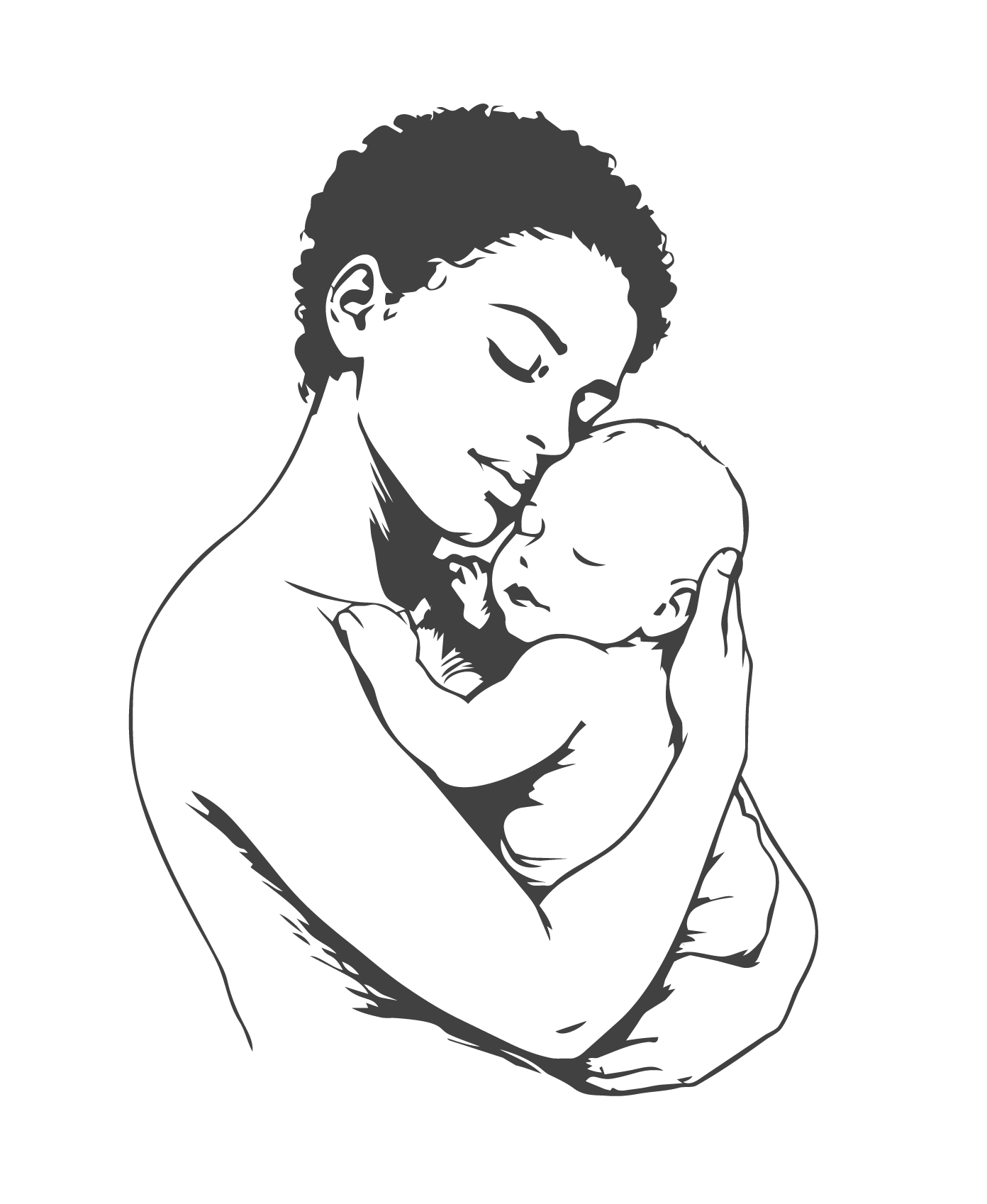
The baby arrives. The woman remains. She is changing, and she deserves care for the whole duration of that change.
Research and connected reading
- American College of Obstetricians and Gynecologists, Optimizing Postpartum Care. Clinical recommendations for ongoing postpartum attention to physical, social and psychological wellbeing.
- The Astonishing Excess of Love. On awe, tenderness and the enlargement of life through care.
- The Hours Nobody Counts. On invisible responsibility and cognitive labour.
- Sisterhood Is Not a Luxury. On the social body of care and the role of reciprocal support.
- Institute of Inner Technology, Human Capacities. Further language for responsibility, care, regulation and choice.
The scenes are illustrative. Significant postpartum symptoms, injury, depression, anxiety or other health concerns deserve appropriate individual assessment and care.
A free course to continue
Whose Needs Are You Already Carrying?
Make the anticipating, remembering and organising visible. Choose one responsibility to share, renegotiate or safely delay. Free at the Sensual Institute; account and login required.