
The first time the future had a face
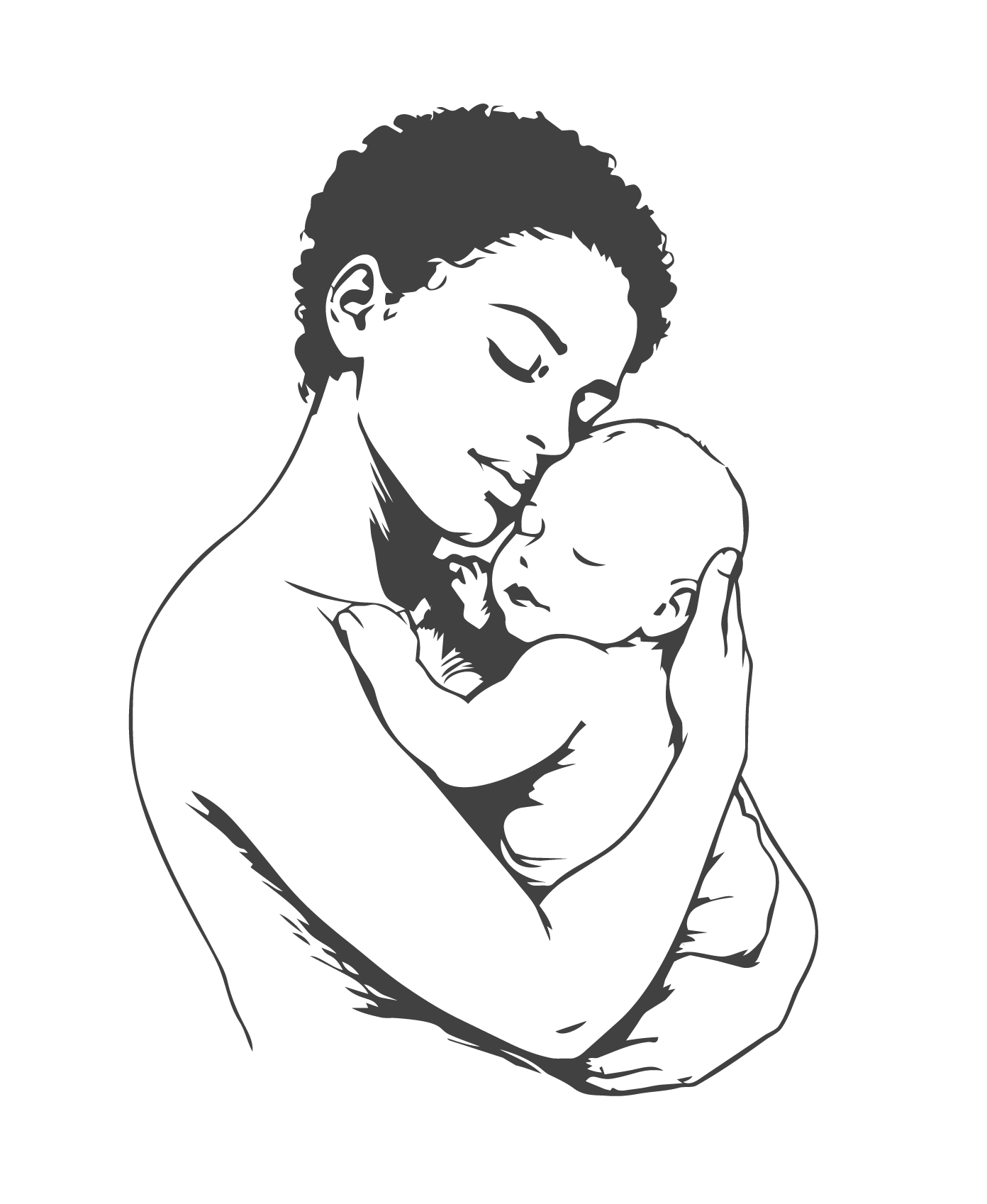
Imagine a woman walking through a city with a child who has just learned to point. Everything interrupts them. The orange construction truck. A pigeon shaking rain from its wings. A crack in the pavement, large enough to contain a small universe of ants.
The woman has an appointment. Her phone keeps lighting up. She has crossed this street hundreds of times without noticing much beyond the pedestrian signal. Today she sees the world at the speed of the child beside her.
The child points to the moon, barely visible in a pale afternoon sky, and shouts as if the moon has arrived solely to meet them.
The woman laughs. Then something surprising happens. She begins thinking about the sky this child will live under when she herself is old. The streets they will walk. The people who may love them. The technologies that may shape their attention. The kind of society that will decide whether they can breathe clean air, afford a home and find time for one another.
The future, formerly an abstract horizon, has acquired a face.
Love does not always make life easier. Sometimes it makes the world impossibly large.
The expansion nobody ordered
Becoming responsible for another person can alter how ordinary time is felt. A breakfast is no longer only something to eat. It becomes a first lesson in taste, patience, sharing, mess and laughter. A bedtime story can contain the first question a child asks about death. A walk in the rain can become a memory that remains long after the adult has forgotten the errands she was trying to complete.
Not all mothers experience this sense of expansion. Some feel nothing like it, especially in periods of exhaustion, depression, fear or overwhelming responsibility. Some experience it through adoption, fostering, extended family, friendship or care that has little to do with parenthood. Others have chosen not to have children and live extraordinarily relational lives.
The point is not that motherhood gives a woman access to a higher truth. It is that particular kinds of attachment can reorganise what matters, and sometimes the change is beautiful.
Beauty does not require denying cost.
The astonishing attention of care
There is a kind of attention that grows from learning one particular person. The child who cannot yet say why the sock feels wrong. The way they are quiet before becoming ill. The song that helps them sleep, but only when it is sung badly. The facial expression that means curiosity rather than disobedience.
Over time, care can train observation. It can also make a caregiver hypervigilant and exhausted. We should not romanticise every act of monitoring. The distinction matters: attention offered in connection is not the same as never being allowed to stand down.
Philosopher Sara Ruddick, in Maternal Thinking, argued that the work of caring for children involves forms of practical thought shaped by preservation, growth and social acceptability. Her account is one important philosophical contribution, not a claim that all women naturally think alike. It invites us to take the intelligence of care seriously.
What is learned when one person’s needs cannot be answered with a generic solution? Maybe a form of particularity. The growing ability to notice this child, not an imagined average child. Their temperament, their context, their fear, their humour.
In a world increasingly organised around categories and predictions, particular attention is radical in an ordinary way. A person cannot be reduced to the nearest convenient template.
Children are not projects
The desire to give a child a better life can quietly become an attempt to design the person the child will become.
There are lessons, activities, books, educational systems, developmental milestones. Parents are exposed to endless advice, much of it presented as urgent. Every choice risks being framed as an investment whose future return must be maximised.
But a child is not a project whose success confirms the wisdom of the parent. They are a person, emerging in relation to others, with preferences and capacities nobody can fully predict.
Love expands the world partly by confronting us with limits. We can influence, protect, teach and respond. We cannot possess another person’s becoming.
This can be frightening. It can also be a relief. If a child does not exist to complete the story of the parent, then the parent need not use the child’s life to justify her own sacrifices.
Both lives become larger when neither must serve as the other’s entire explanation.
The ethics of having a future
A mother watches the news differently when an event suddenly seems to concern somebody who will inherit its consequences. Climate change, violence, education, public health, artificial intelligence, housing and economic inequality can all acquire new emotional weight.
This is not a claim that becoming a parent automatically makes people more ethical, politically knowledgeable or compassionate. History provides ample evidence to the contrary. A child can deepen generosity or intensify fear of strangers. Care can widen a circle or narrow it.
That is why we must distinguish the felt expansion from what we choose to do with it.
The Institute of Inner Technology’s work on human capacities raises questions about the judgement, attention and relational abilities needed in a changing world. Parenting is one place those questions become intimate. What does it mean to help a younger person develop discernment in systems designed to capture attention? To teach safety without teaching permanent fear? To model disagreement without contempt?
No single family can solve these problems. Yet families live inside the structures that shape them, and their questions are part of the public conversation.
Love may begin in a kitchen and insist on becoming political.
The delight of witnessing
There is another side, smaller and more joyful. A child’s first deliberate joke. The first time they notice that another person is sad and attempt comfort. The serious concentration involved in pouring water into a glass without spilling it. The sudden pronouncement that worms are misunderstood.
These moments are not impressive by the standards of productivity. They produce no measurable output. They are easy to miss when the adult is trying to complete the day.
A woman might find herself laughing harder than she has laughed for months. Nothing has been solved. The rent is still due. The laundry is still there. But the world has produced a new joke through a person she loves.
Joy can be an interruption rather than a reward. It does not appear only once the hard parts have been managed.
The Astonishing Excess of Love explores that overflowing feeling and the need for sisterhood around it. Here the emphasis is different: love can enlarge what the woman is able to notice. The outside world becomes full of possible futures, histories and other lives.
The cost of a wider horizon
When the future grows larger, so can fear. A child becomes ill and a parent imagines a terrible outcome. A school decision takes on the weight of destiny. A normal disagreement evokes worry about the entire future relationship.
We cannot eliminate uncertainty by loving well enough. Anxiety may sometimes become significant enough to warrant professional help, especially when it interferes with ordinary life. But the existence of worry is not proof that the love is defective.
Attachment involves vulnerability. The person matters, and their life is not fully under our control.
A woman may learn to live with this without romanticising it. She can take sensible precautions, seek support, allow others to share responsibility, and recognise the difference between a possibility and a prediction.
The future is not only a field of threats. It is also where children will invent things we cannot imagine and form relationships of which we are not the centre.
Sisters, not an audience
A wider world can become unbearably large when the woman has no one beside her. The person who cares for a child may need someone who can listen to both the awe and the rage, the tenderness and the boredom, the wish to stay and the wish to walk away for an afternoon.
Sisterhood at its best is not a competition over whose mothering is most devoted or whose children are most exceptional. It is a practice of making room for actual lives. One woman can say that she is profoundly happy. Another can say that she feels lost. A third can say both in the same breath.
None needs to correct the others.
This is why gatherings matter. We do not have to turn every experience into a tip or a lesson. We can hear it, recognise its difference from our own, and allow the room to contain more than one truth.
The moon remains in the sky
Return to the city crossing. The woman has missed her first green light because the child wanted to look at a pigeon. She is slightly irritated. The appointment is still waiting. The child points again to the moon, delighted by a discovery the adult has already made thousands of times.
The woman looks up.
There is something extraordinary about loving another person without needing every moment to be extraordinary. This is not permanent wonder. Tomorrow she may be tired, angry, preoccupied or unwell. Today she has been reminded that the world will continue beyond her own biography.
The child will grow. The woman will change. The city will change around them. Neither can keep the afternoon.
But for a moment, the future is not an argument. It is a small hand pointing at the sky.
Further connections
- The Astonishing Excess of Love, on love that expands a life without requiring self-erasure.
- Sisterhood Is Not a Luxury, on the social infrastructure of care.
- The Other Birth: Becoming Someone’s Mother, on shifts in identity and belonging.
- Sara Ruddick, Maternal Thinking, on the practices of care and judgement.
- Institute of Inner Technology, Human Capacities, for the wider questions of human learning and development.
The scenes in this essay are illustrative. There is no single way to experience motherhood, and any pressure to feel wonder can become another burden rather than an invitation.